-
The Accidental Revelation: Anthropic’s Mythos and the Dawn of AI Cyber Weapons

Anthropic’s data leak reveals Claude Mythos — described as ‘by far the most powerful AI model’ ever built — poses ‘unprecedented cybersecurity risks’ that could exploit vulnerabilities faster than any defender. The revelation accelerates the SaaSpocalypse into cybersecurity and forces a reckoning with AI safety frameworks.
-
The Death of Digital Free Trade: WTO 27-Year E-Commerce Moratorium Expires

The WTO e-commerce moratorium—a 27-year ban on customs duties for digital transmissions—officially expired on March 30, 2026, after Brazil blocked extension efforts at MC14 in Yaoundé. Countries can now legally impose customs duties on Netflix, Spotify, cloud computing, and AI services, fragmenting the borderless internet into digital toll booths.
-
China’s Silicon Pact: 13 CEOs, 80% Self-Sufficiency, and the End of the Chip Embargo

At Semicon China 2026, 13 top semiconductor CEOs jointly committed to 80% domestic chip self-sufficiency by 2030. With Hua Hong reaching 7nm, Huawei’s Ascend 950PR winning orders, and US export rules withdrawn, China is building a parallel semiconductor stack that could permanently split the global chip supply chain.
-
The Autonomous Payments Revolution: How AI Agents Are Rewiring the $8.5 Trillion Commerce Stack

Mastercard, Visa, and Google are simultaneously building infrastructure for AI agents to autonomously initiate and complete financial transactions — the biggest shift in payments since the credit card was invented in 1950. The $8.5 trillion global payments industry faces structural disruption as agentic commerce rewires who controls the checkout flow.
-
Russia’s Golden Paradox: The Kremlin Sells Its Crown Jewels While War Fills Its Coffers

Russia is simultaneously experiencing a historic oil windfall from the Iran war and selling physical gold reserves for the first time in 25 years. The disposal of 14 tonnes reveals the structural fragility beneath the wartime economic facade.
-
SpaceX’s $1.75 Trillion Wartime IPO: The Most Dangerous Listing in Market History

SpaceX files its S-1 with the SEC this week targeting a $1.75 trillion valuation — the largest IPO in history — while the Iran war enters its 30th day, Brent crude trades above $100, and the Fed faces a 52% rate hike probability. The dual-class structure concentrating power in Musk, combined with a 3-4% float…
-
Africa’s Collateral Siege: The Continent That Always Pays for Someone Else’s War
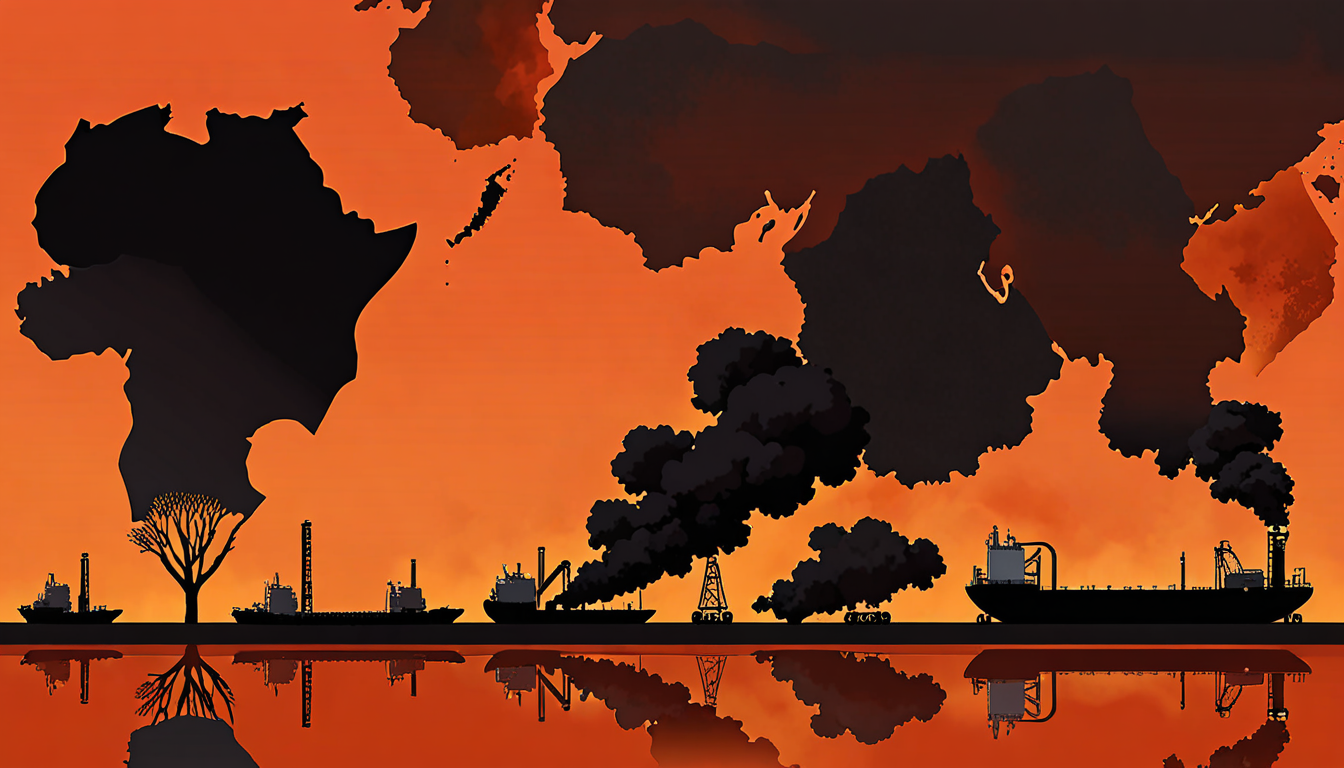
How Iran’s Hormuz Blockade devastates the world’s fastest-growing continent through fuel, fertilizer, and flowers. Nigeria fuel +35%, Kenya outlets 20% dry, $1.4M/week flower losses, 8,000 tonnes tea stranded. Dangote Refinery emerges as Africa’s accidental energy shield.
-
The Great AI Research Schism: How a Conference Policy Nearly Split Global Science

NeurIPS banned papers from US-sanctioned entities. China boycotted. Within 48 hours, the world’s premier AI conference reversed course — but the damage to global research cooperation may already be done. Deep analysis of the structural dependencies, historical parallels, and three scenarios for AI’s bifurcating future.
-
The Death of Consensus: WTO’s Digital Trade Revolution and the Fracturing of Global Commerce

At the WTO’s MC14 in Yaoundé, ~90 members bypassed the consensus requirement to launch the world’s first baseline digital trade rules—signaling the irreversible fragmentation of the multilateral trading system into variable-geometry coalitions, with profound implications for the $4.18 trillion AI-driven digital trade sector.
-
Manila’s Dual Track: The Philippines’ High-Wire Act Between Deterrence and Dialogue

How a 115-million-person archipelago is simultaneously arming against and talking to China—while the Iran war rewrites the rules of alliance politics. The Philippines signed a visiting forces agreement with France while resuming South China Sea talks with Beijing, as Japan prepares to deploy combat troops to Balikatan for the first time since WWII.

Eco Stream
Global Economic & Geopolitical Insights | Daily In-depth Analysis Report