
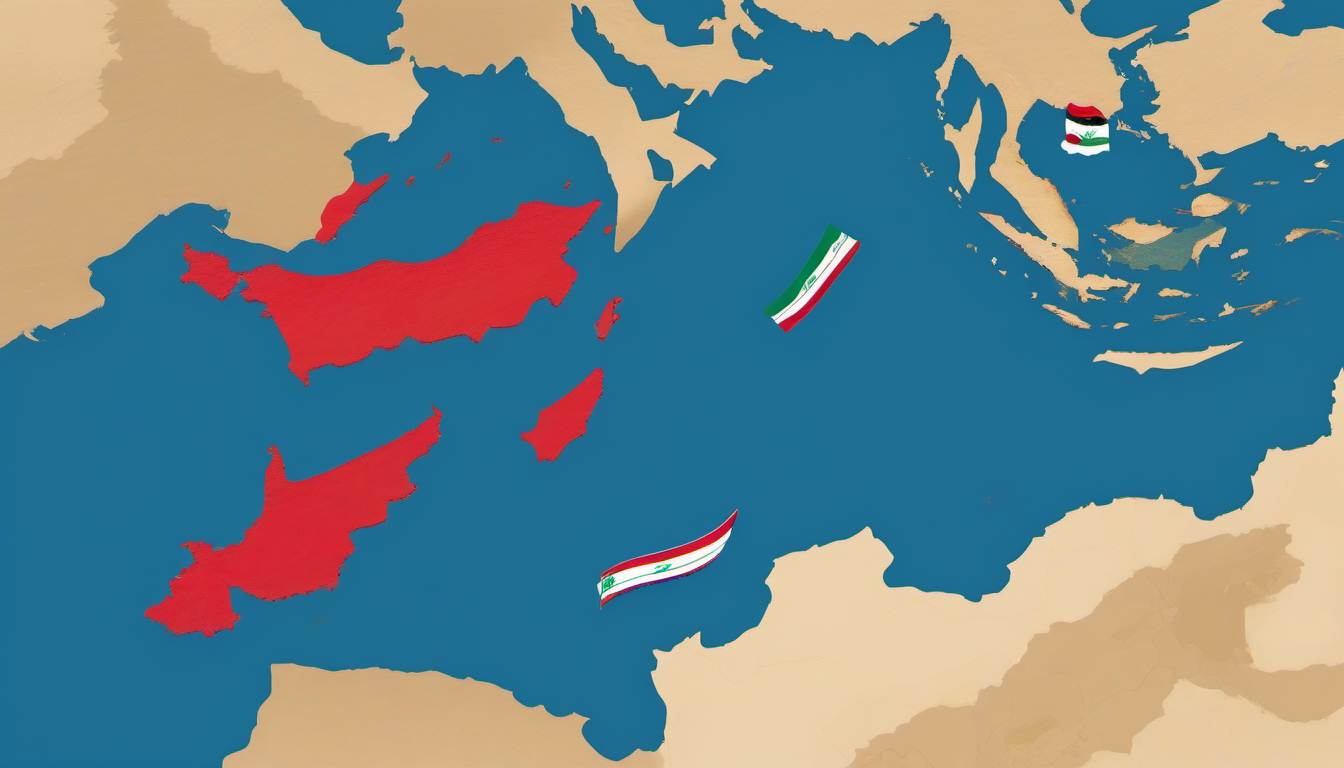
Iran's selective blockade splits global energy access along civilizational lines, creating a two-tier world order in real time
Executive Summary
- Iran's IRGC has shifted from a total Strait of Hormuz blockade to a selective one, initially permitting only Chinese vessels, then expanding to non-Western ships — an unprecedented use of chokepoint control as a geopolitical sorting mechanism
- The move rewards Beijing for its diplomatic support while punishing Western nations, effectively creating two parallel energy systems split along alignment lines — a development with no historical precedent in maritime commerce
- This "Hormuz Filter" threatens to accelerate the fracturing of the global trading system far more than tariffs or sanctions ever could, turning energy access into a loyalty test and reshaping everything from shipping insurance to alliance structures
Chapter 1: From Total Blockade to Selective Filter
When Iran's Islamic Revolutionary Guard Corps declared the Strait of Hormuz a war zone on March 1, the initial message was universal: no ship shall pass. For four days, roughly 750 commercial vessels sat idle as 20% of global oil supplies and 20% of LNG shipments ground to a halt. Insurance markets seized, energy prices spiked, and the world braced for a replay of the 1973 oil shock.
Then on March 5 — Day 6 of Operation Epic Fury — the IRGC made an announcement that transformed the crisis from an energy emergency into something far more consequential: a geopolitical sorting mechanism.
Through Iran's state broadcaster, the IRGC declared that the Strait was closed exclusively to vessels from the United States, Israel, Europe, and their Western allies. Non-Western ships — initially Chinese only, as a "gesture of thanks" for Beijing's support — would be permitted through.
The shift from total blockade to selective filter was not merely tactical. It was strategic in the deepest sense: Iran was using control over the world's most critical energy chokepoint to divide the global order along civilizational fault lines, rewarding those who stood with it (or at least refused to join the attack) and punishing those who did not.
Chapter 2: The Anatomy of a Selective Blockade
How It Works
Iran's control mechanism relies on three layers:
1. Physical deterrence. The IRGC Navy, despite heavy losses from U.S. strikes, retains enough coastal missile batteries, fast attack craft, and mine-laying capability to threaten any vessel attempting unauthorized passage. The strait narrows to just 33 kilometers at its tightest point, with shipping lanes running through Iranian territorial waters under the 1982 UNCLOS transit passage regime.
2. Information warfare. With Iran under near-total internet blackout, the IRGC controls the information environment within the strait. VHF radio warnings are issued to approaching vessels. Ships cannot independently verify conditions ahead.
3. Insurance architecture. Even if the physical threat were manageable, Lloyd's of London and major P&I clubs have already cancelled war-risk coverage for the Persian Gulf. No insurance means no trade finance, no letters of credit, no cargo movement — regardless of whether a shell actually hits.
The China Exception
Beijing's privileged access is not merely symbolic. China imports approximately 13.4% of its seaborne crude from Iran — a dependency that became existential under the blockade. More critically, China is the world's largest crude importer overall, with roughly 50% of its supply transiting the Hormuz Strait.
Iran's $400 billion Comprehensive Strategic Partnership with China, signed in 2021, always had an implicit security dimension. Now, under fire, Tehran is making that dimension explicit: loyalty earns energy access.
China's reaction to the war set the stage. Foreign Minister Wang Yi called the killing of Khamenei "unacceptable" and the incitement of regime change a violation of sovereignty. Beijing demanded an immediate ceasefire while Russia provided diplomatic cover at the UN Security Council. For Tehran, this was enough to open the gates.
The Expanding Filter
Within 24 hours of the initial China-only announcement, the filter began widening. India — which depends on the Strait for 50% of its crude imports — reportedly opened backchannel communications with the IRGC through Omani intermediaries. Several Gulf Arab states, despite being hit by Iranian retaliatory strikes, began quietly exploring whether their own flagged vessels might receive passage rights if they distanced themselves from the U.S.-Israeli operation.
The filter was becoming a loyalty auction.
Chapter 3: Historical Precedent — or Lack Thereof
No nation has ever attempted a selective blockade of an international waterway based on geopolitical alignment. The concept violates fundamental principles of maritime law.
| Historical Blockade | Target | Discrimination |
|---|---|---|
| Berlin Blockade 1948 | Western sectors | Geography-based |
| Cuban Missile Crisis 1962 | Soviet ships | Flag-based (all Soviet) |
| Iran-Iraq Tanker War 1984-88 | Both sides' oil | Indiscriminate |
| Houthi Red Sea 2023-24 | Israel-linked | Cargo/destination-based |
| Hormuz 2026 | Western-flagged | Alignment-based |
The closest precedent is the Houthi campaign in the Red Sea, which targeted ships based on Israeli connections. But the Houthis were a non-state actor with limited enforcement capability. Iran is a sovereign nation with one of the Middle East's largest navies (even depleted) controlling the single most important energy chokepoint on Earth.
UNCLOS Article 38 guarantees transit passage through straits used for international navigation. Article 44 prohibits coastal states from hampering transit passage. Iran's selective blockade violates both provisions. But international law, as the past six days have demonstrated, yields to kinetic reality.
Chapter 4: The Two-Tier Energy World
Winners
China emerges as the immediate beneficiary. If Chinese-flagged and Chinese-chartered vessels can transit while Western tankers cannot, Beijing gains:
- Monopsony pricing power — as the dominant buyer with access, it can demand steep discounts from Gulf producers
- Re-export leverage — Chinese ports become the world's energy interchange, with crude refined and re-exported at premium margins
- Strategic credibility — demonstrating to the Global South that alignment with Beijing provides tangible material benefits
India occupies the swing position. New Delhi has carefully maintained its multi-alignment strategy — purchasing Russian oil despite Western sanctions, maintaining defense ties with both the U.S. and Russia, and refusing to condemn Iran. If India secures passage rights, it validates the strategy of strategic ambiguity.
Gulf producers face a paradox. Saudi Arabia, UAE, Qatar, and Kuwait have been hit by Iranian retaliatory strikes. Yet their economic survival depends on the Strait remaining open. If Iran offers passage for tankers serving non-Western buyers, Gulf states face an excruciating choice: support the U.S.-led coalition and lose their primary revenue stream, or distance themselves and regain market access.
Losers
Europe faces a second energy crisis in four years. Having painfully weaned itself off Russian gas after 2022, the EU now confronts the loss of Gulf LNG — 20% of global supply transits Hormuz. TTF natural gas prices have already surged 50%. With gas storage at 30% (the lowest on record for this time of year), Europe has roughly 6-8 weeks before industrial rationing becomes necessary.
Japan and South Korea are the most vulnerable developed economies. Japan depends on the Strait for 75% of its crude imports; South Korea for 60%. Neither has significant pipeline alternatives. Strategic petroleum reserves provide 90-150 days of cover, but the selective blockade's indefinite nature creates planning paralysis.
The United States — despite near energy self-sufficiency — cannot escape the price effects. Global oil markets are interconnected; Brent's surge toward $80+ ripples through domestic gasoline prices. More critically, the U.S. Navy's promise to escort tankers through the Strait faces the awkward reality that escorted convoys require insurance coverage that doesn't exist.
Chapter 5: Scenario Analysis
Scenario A: U.S. Breaks the Filter by Force (30%)
Trigger: Trump orders naval escorts; IRGC attacks an escorted convoy; U.S. responds with massive strikes on Iranian coastal defenses.
Rationale: Trump's Truth Social pledge — "the United States will ensure the FREE FLOW of ENERGY to the WORLD" — creates political pressure to act. The Tanker War of 1987-88 provides precedent for Operation Earnest Will-style escorts. Historically, the U.S. Navy has never allowed a sustained blockade of international waterways.
Historical precedent: During the Tanker War, the U.S. Navy reflagged Kuwaiti tankers and escorted them through the Strait. Iran mined the waterway and attacked several vessels, leading to Operation Praying Mantis — the largest U.S. naval engagement since World War II.
Risk: Escalation spiral. Forcing the Strait while bombing Tehran simultaneously could provoke Iran's remaining asymmetric capabilities: mines, anti-ship missiles, and potential attacks on Saudi/Emirati oil infrastructure.
Scenario B: The Filter Becomes the New Normal (45%)
Trigger: War continues for weeks; China establishes regular convoy operations; non-Western nations negotiate passage; Western nations rely on alternatives.
Rationale: Iran has limited incentive to open the Strait to Western nations while being bombed by them. China has every incentive to consolidate its energy advantage. The selective blockade becomes self-reinforcing as trade patterns adapt. OPEC+ spare capacity (primarily Saudi) partially compensates for lost Gulf supply to Western markets via Red Sea routes.
Historical precedent: The 1973 Arab oil embargo was selective (targeting U.S. and Netherlands specifically) and lasted five months, reshaping global energy politics permanently. The current selective blockade mirrors this logic at a far larger scale.
Risk: Permanent bifurcation of global energy markets. Two pricing systems emerge: one for the "Hormuz-access" world (centered on Chinese trading hubs), another for the "Hormuz-denied" world (centered on Atlantic and alternative sources).
Scenario C: Ceasefire Collapses the Filter (25%)
Trigger: Diplomatic breakthrough; Iran's provisional leadership, under military pressure, agrees to a ceasefire that includes reopening the Strait.
Rationale: Iran's economy cannot survive indefinitely under blockade plus bombardment. Araghchi's continued diplomatic engagement (calling the IRIS Dena sinking an "atrocity" rather than a casus belli) suggests Tehran retains a negotiating posture. Trump's desire to "be involved in the appointment" of Khamenei's successor implies a political deal is his preferred exit.
Historical precedent: The 1988 ceasefire in the Iran-Iraq War reopened the Strait within days. UN Resolution 598 provided the framework.
Risk: A ceasefire that doesn't address Iran's security concerns simply resets the clock. Any future crisis could revive the selective blockade concept.
Chapter 6: Investment Implications
Energy
- Brent crude likely trades in a $75-95 range under Scenario B, with Chinese-hub prices diverging from Atlantic-hub prices
- LNG spot prices face 50-130% upside as European buyers scramble for non-Hormuz supply (U.S. Gulf Coast, Australia, West Africa)
- Pipeline operators — TANAP, Trans-Arabian, East-West Saudi — gain strategic premium
Shipping
- Chinese-flagged tankers (COSCO Shipping Energy) benefit from exclusive Hormuz access
- Western tanker operators (Frontline, Euronav) face stranded assets in the Gulf
- War-risk insurance becomes a structural feature of global trade, not a temporary premium
Defense
- Anti-ship missile defense (Raytheon, Lockheed Martin) sees accelerated procurement
- Mine countermeasures (BAE Systems, Thales) gain urgency
- Naval construction — the U.S. 355-ship navy target becomes bipartisan imperative
Geopolitical Risk
- Alignment premium — assets in countries with Hormuz access trade at a premium
- Neutral-state arbitrage — Singapore, Turkey, Oman position as energy transshipment hubs
- De-dollarization acceleration — if Chinese-hub energy trades in yuan, the dollar's commodity pricing monopoly erodes faster than any policy could achieve
Conclusion
The Hormuz Filter is not merely a wartime tactic. It is the most consequential test of the post-1945 global trading order since the system was built. The principle that international waterways remain open to all — enshrined in UNCLOS, enforced by the U.S. Navy for eight decades — faces its first credible challenge from a state actor wielding alignment-based discrimination.
If the filter holds, even temporarily, it establishes a precedent that transforms every major chokepoint into a potential geopolitical sorting mechanism: the Strait of Malacca, the Suez Canal, the Panama Canal, the Turkish Straits. The lesson will not be lost on any power with geographic leverage.
The world has spent three decades debating whether globalization could survive rising nationalism. The Hormuz Filter suggests the answer may not be yes or no, but rather: globalization for whom?
Eco Stream · March 6, 2026
Leave a Reply