
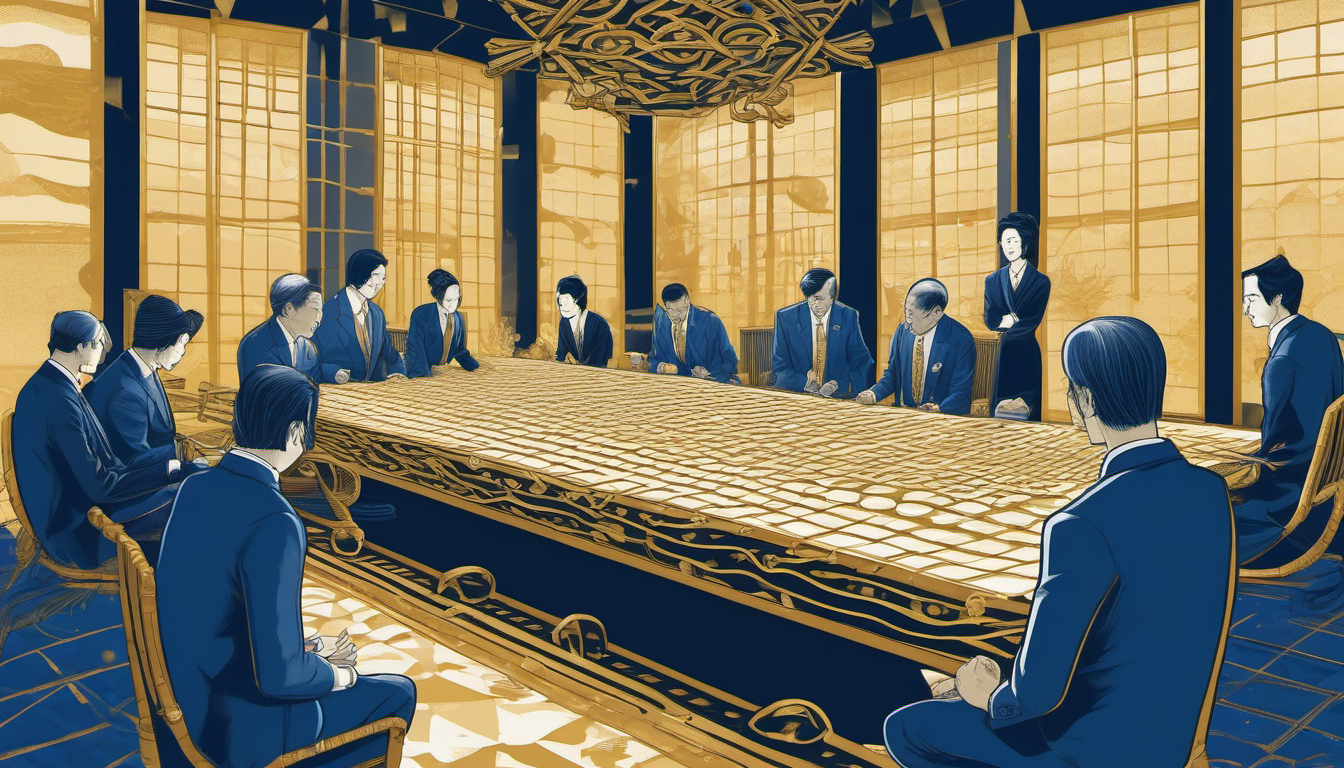
How Elliott Investment Management forced Toyota's founding family to pay up—and what the largest Japanese buyout in history reveals about the contradictions of corporate governance reform
Executive Summary
- Toyota Group has agreed to privatize Toyota Industries Corporation (TICO) at ¥20,600 per share ($43 billion), making it the largest-ever acquisition of a Japanese company—after activist fund Elliott Investment Management forced two price increases from the original ¥16,300 offer.
- The deal exposes a fundamental tension in Japan's governance reforms: dismantling cross-shareholdings while the founding Toyoda family consolidates control through an opaque unlisted holding structure, raising questions about whether "reform" is merely reorganization.
- Elliott stands to pocket approximately $500 million in profit, validating the activist playbook in Japan and likely accelerating a wave of similar campaigns targeting Japan's ¥80+ trillion in remaining cross-shareholdings.
Chapter 1: The Architecture of an Empire
Toyota Industries Corporation is not just another auto parts supplier. Founded in 1926 by Sakichi Toyoda to manufacture automatic looms, it is the literal birthplace of the Toyota empire. Sakichi's son Kiichiro spun off the automotive division in 1937, which became Toyota Motor Corporation—today the world's largest carmaker by volume.
But TICO never became a mere footnote. Over the decades, it grew into a sprawling conglomerate manufacturing forklifts, textile machinery, car air conditioning compressors, and even assembling some Toyota vehicles. More importantly, it accumulated stakes in virtually every Toyota group company, including Toyota Motor itself. By 2025, TICO's cross-shareholdings were worth nearly as much as its own market capitalization—a classic symptom of Japan's keiretsu system.
The keiretsu model, born from the ashes of Japan's wartime zaibatsu conglomerates that were broken up by American occupation forces after 1945, created webs of mutual shareholdings designed to provide stability, prevent hostile takeovers, and ensure long-term business relationships. At their peak in the early 1990s, cross-shareholdings accounted for roughly 50% of all listed shares on the Tokyo Stock Exchange. By 2024, that figure had fallen to approximately 10%—but within the Toyota group, the old ways persisted.
| Metric | Detail |
|---|---|
| Original offer (Jun 2025) | ¥16,300/share |
| Second offer (Jan 2026) | ¥18,800/share (+15.3%) |
| Final offer (Mar 2026) | ¥20,600/share (+26.4% from original) |
| Total deal value | ¥6.7 trillion (~$43 billion) |
| Avg. privatization premium (TSE data) | 44% |
| Actual premium to pre-leak price | 11% (initial offer) |
| Elliott's estimated profit | ~$500 million |
Chapter 2: The Activist at the Gate
Elliott Investment Management, founded by Paul Singer in 1977, has built a reputation as one of the world's most relentless activist investors. The firm manages approximately $70 billion and has a track record of extracting value from targets ranging from Argentine sovereign debt to Samsung Electronics.
Elliott began accumulating its TICO stake in late 2024, eventually building a position of roughly 7.1%—approximately 23.3 million shares acquired at an average cost of around ¥17,170. When Toyota's initial bid of ¥16,300 was announced in June 2025, Elliott immediately cried foul.
The fund's argument was straightforward: the offer represented an 11% discount to TICO's last closing price before the announcement, and sat well below the midpoint of the Special Committee's own discounted cash flow valuation. Elliott publicly stated that TICO was worth at least ¥26,000 per share, possibly more under an alternative business strategy.
The standoff lasted nearly a year. Toyota raised its bid once to ¥18,800, then again to ¥20,600 in early March 2026. Elliott, while still maintaining the company was worth more, agreed to tender. At ¥20,600, the fund stood to earn roughly ¥80 billion ($500 million) before costs.
This is not the first time Western activists have challenged Japan's corporate establishment. In 1989, T. Boone Pickens launched a hostile bid for Koito Manufacturing, a Toyota group lighting supplier, acquiring 26% of shares but never gaining a board seat. Pickens eventually gave up, declaring Japan's corporate system impenetrable. Elliott's success—even if partial—marks a dramatic shift from that era.
Chapter 3: The Toyoda Family's Gambit
The deal's most controversial element is its structure. Toyota did not simply make a direct acquisition. Instead, an unlisted real estate subsidiary called Toyota Fudosan—chaired by Akio Toyoda himself—set up a special-purpose company to conduct the tender offer. Toyoda personally invested ¥1 billion, while Toyota Motor contributed ¥700 billion for non-voting preferred shares yielding 8.5%.
Critics see this as a masterstroke of control consolidation disguised as governance reform. The Toyoda family directly owns less than 0.2% of Toyota Motor's shares—a tiny fraction with no special voting rights. But through the unlisted holding structure, Akio Toyoda gains effective control over TICO's vast portfolio of cross-shareholdings, including its Toyota Motor stake, without the transparency obligations that come with public listing.
"It looks more like a consolidation of influence and an attempt to keep Akio Toyoda and his family in control of certain assets," said Nicholas Benes, founder of the Board Director Training Institute of Japan and a key architect of Japan's corporate governance code.
Toyota's spokesperson countered that "Mr. Toyoda's reason for investing is to support this framework as a capitalist. It is not intended to lead to control over the Toyota group."
Yet independent analysts are less sanguine. Travis Lundy, an independent Japan equity analyst based in Hong Kong, noted that the deal structure could make the Toyoda family "immensely wealthy" while giving Akio Toyoda operational control through layers of unlisted entities.
The Asian Corporate Governance Association (ACGA) published a detailed critique, noting that the Special Committee charged with protecting minority shareholders achieved only an 11% price increase and ultimately adopted a "neutral" stance—rather than recommending or opposing the deal. The committee failed to provide an independent fairness opinion or disclose its internal deliberations.
Chapter 4: Scenario Analysis—What Happens Next
Scenario A: Successful Privatization and Keiretsu Transformation (55%)
Rationale: Elliott's agreement to tender removes the most significant obstacle. The revised deadline of March 16, 2026, provides adequate time for remaining shareholders to decide. Financing from Japan's three megabanks (MUFG, SMFG, Mizuho) is reportedly secured.
Historical precedent: Japan has seen a steady increase in management buyouts and going-private transactions since the 2023 TSE reform push. In 2024-2025, take-private deals reached record levels, with the total value exceeding ¥3 trillion annually.
Trigger conditions: The tender achieves the minimum acceptance threshold (likely two-thirds of outstanding shares). A squeeze-out of remaining shareholders could begin by mid-May 2026.
Implications: TICO goes dark, cross-shareholdings are unwound over 3-5 years, freeing up estimated ¥3-4 trillion in capital. Other Toyota group companies (Denso, Aisin) face similar activist pressure. Sets precedent for the dismantling of Japan's last major keiretsu structures.
Scenario B: Partial Success with Regulatory Scrutiny (30%)
Rationale: While the tender likely succeeds technically, regulators—particularly the Financial Services Agency (FSA) and the TSE—may impose conditions. The opaque holding structure, combined with international media attention, creates political pressure for enhanced disclosure requirements.
Historical precedent: Japan's 2023 governance code revision already required companies to explain cross-shareholdings. The TICO deal's structure—using an unlisted entity to circumvent transparency—could prompt the next regulatory evolution.
Trigger conditions: Public criticism from governance bodies (ACGA, Institutional Shareholder Services), questions raised in the Diet, or a formal FSA inquiry into the special-purpose company structure.
Implications: Deal closes but with mandated disclosures. New regulations tighten rules on take-private transactions involving controlling shareholders. The "Toyoda model" is constrained but not blocked.
Scenario C: Deal Collapses or Restructures (15%)
Rationale: Though unlikely given Elliott's agreement, a scenario where financing banks withdraw (amid war-driven credit stress) or remaining minority shareholders mount legal challenges cannot be fully excluded.
Historical precedent: In 2007, the proposed privatization of Japan's Bull-Dog Sauce by Steel Partners was blocked by a poison pill upheld by courts—though the legal landscape has evolved significantly since then.
Trigger conditions: Credit market disruption from the ongoing Iran conflict, a major governance scandal, or a court injunction filed by other institutional investors.
Implications: TICO remains listed but faces a governance crisis. Elliott likely pursues alternative value realization strategies (board seats, asset sales).
Chapter 5: Investment Implications
Direct Impact
Toyota Motor (7203.T): The ¥700 billion preferred share investment is neutral to mildly positive—it simplifies the group structure and yields 8.5%. The unwinding of cross-shareholdings should improve Toyota Motor's governance rating and potentially its price-to-earnings multiple, which trades at a persistent discount to global peers (approximately 10x forward earnings vs. 15-18x for Volkswagen and GM).
Japanese megabanks (MUFG, SMFG, Mizuho): Financing the ¥6.7 trillion deal generates substantial advisory and lending fees. Japan's banking sector has been a key beneficiary of increased M&A activity, with fee income from advisory services up 40% year-over-year in FY2025.
Broader Implications
The activist premium in Japan: Elliott's $500 million profit on a roughly year-long campaign validates the playbook. Japan's cross-shareholdings still total an estimated ¥80 trillion or more. Expect accelerated activist campaigns targeting Mitsubishi, Sumitomo, and other keiretsu groups.
Governance ETFs and indices: Funds tracking Japan's governance reform theme (e.g., JPX-Nikkei 400, WisdomTree Japan SmallCap Dividend Fund) may see increased inflows as the TICO deal demonstrates that activism produces tangible results.
| Asset | Expected Impact | Timeframe |
|---|---|---|
| Toyota Motor (7203.T) | Mild positive (governance re-rating) | 6-12 months |
| TICO (6201.T) | Price converges to ¥20,600 | By March 16 |
| Japanese megabanks | Fee income boost | Q1-Q2 FY2026 |
| Denso (6902.T), Aisin (7259.T) | Activist target risk/opportunity | 12-24 months |
| Japan activist funds | AUM growth | 2026-2027 |
Conclusion
The Toyota Industries privatization is a Rorschach test for Japan Inc. Optimists see the unwinding of a century-old web of cross-shareholdings and the triumph of shareholder capitalism. Skeptics see a founding family using governance reform rhetoric to consolidate control through opaque structures.
Both readings contain truth. Elliott forced Toyota to pay a fair price—but not the full value many believe the assets deserve. The keiretsu is being dismantled—but the replacement structure may concentrate power even further. Japan's corporate governance revolution continues—but its contradictions are becoming harder to ignore.
The ¥80 trillion question is whether this deal opens the floodgates for activist campaigns across Japan's remaining cross-shareholding complexes, or whether the Toyoda family's privatization model becomes a template for insiders to entrench themselves under the banner of reform. The answer will shape Japanese capitalism for the next decade.
Leave a Reply