
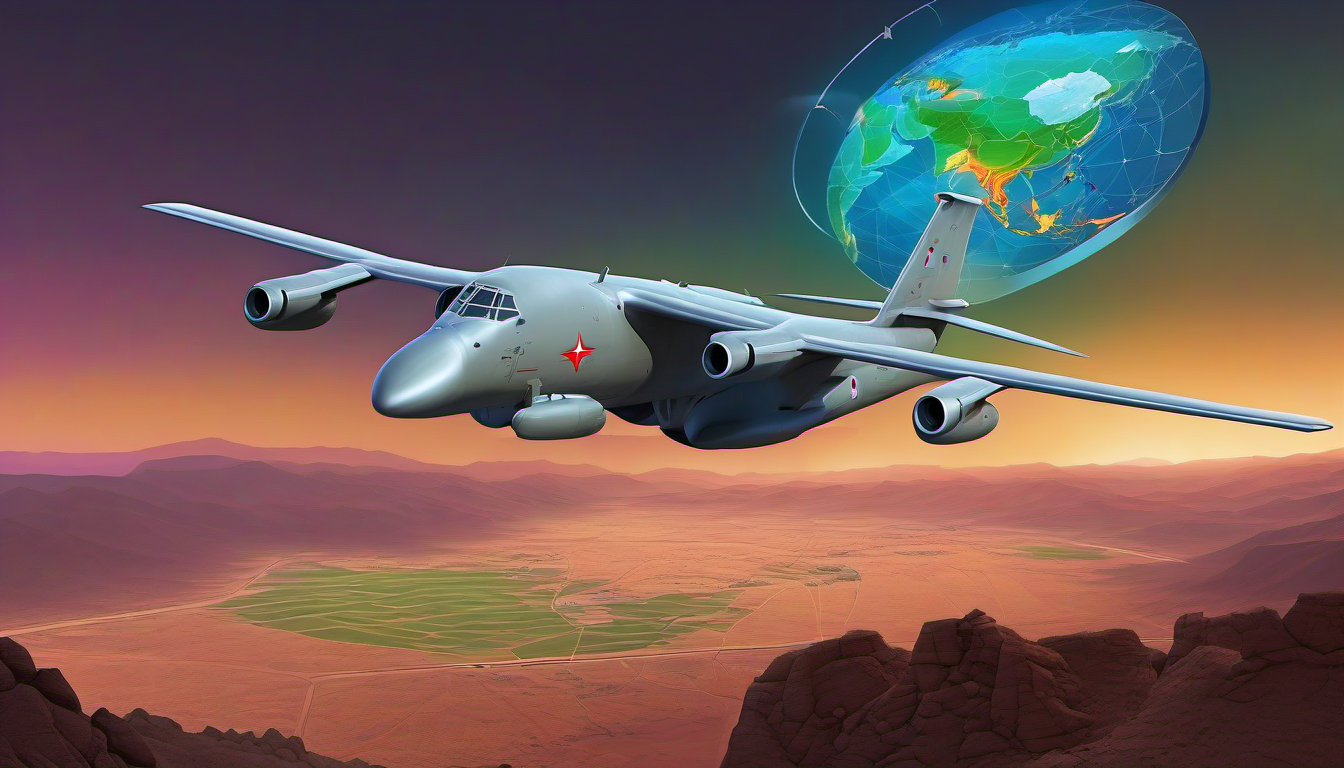
How the largest U.S. military buildup since 2003 is reshaping NATO's surveillance architecture and forcing Turkey to prepare for the unthinkable
Executive Summary
- NATO AWACS aircraft based in Konya, Turkey have shifted their primary surveillance focus from Russia to Iran — a historic reorientation of alliance intelligence-gathering priorities that signals how seriously NATO views the escalating U.S.-Iran confrontation.
- Turkey has updated contingency plans that include a potential cross-border military operation into Iranian territory to establish a "buffer zone" against refugees — an extraordinary measure that would mark the first NATO member invasion of Iran since the Allied occupation of 1941.
- The U.S. has deployed over 150 aircraft and assembled its largest Middle Eastern naval force since the 2003 Iraq invasion — 2 carriers, 14 warships, and dozens of strike aircraft — yet CSIS analysis reveals critical gaps: no Marines, no special operations forces, and insufficient logistics for an extended campaign.
Chapter 1: The Konya Shift — NATO's Eyes Turn East
For decades, NATO's Airborne Warning and Control System (AWACS) fleet based at Konya Air Base in central Turkey served a singular strategic purpose: monitoring Russian military activity along NATO's eastern flank. These E-3A Sentry aircraft — nicknamed "flying radars" — tracked Russian bomber patrols, naval movements in the Black Sea, and air force exercises near the Baltic states. The mission defined NATO's post-Cold War surveillance architecture.
In late February 2026, that architecture quietly transformed. According to Bloomberg, citing officials familiar with the matter, NATO AWACS missions from Konya have shifted their primary focus from Russia to Iran. The reorientation represents one of the most significant changes in NATO's intelligence-gathering priorities since the alliance began its eastward expansion in the 1990s.
The shift carries profound strategic implications. NATO's surveillance apparatus was built around a Russian threat matrix. Reorienting it toward Iran means the alliance is either deprioritizing the Russian threat — unlikely given Moscow's ongoing war in Ukraine — or stretching its surveillance resources dangerously thin across two fronts simultaneously. Neither scenario is comfortable for NATO planners.
The timing is telling. The surveillance pivot accelerated after the second round of U.S.-Iran nuclear talks in Geneva ended without breakthrough on February 17. Within days, the Washington Post reported that more than 150 U.S. military aircraft had been repositioned to bases across Europe and the Middle East — a deployment satellite imagery confirmed as one of the largest regional force concentrations in decades.
Chapter 2: The Armada — Anatomy of the Buildup
The Center for Strategic and International Studies (CSIS) published a detailed force assessment on February 24 that provides the clearest picture yet of what the U.S. has assembled near Iran. The numbers are striking:
| Asset | Details |
|---|---|
| Aircraft Carriers | USS Abraham Lincoln (CSG-3), USS Gerald R. Ford (CSG-12) |
| Surface Warships | 14 ships including destroyers and cruisers |
| Aircraft | 150+ repositioned to regional bases |
| Key Locations | Strait of Hormuz, Red Sea, Mediterranean, Persian Gulf |
| F-22 Raptors | 12 deployed to Ovda, Israel (first-ever foreign basing) |
This is the largest U.S. naval concentration in the Middle East since five carrier battle groups assembled for Operation Iraqi Freedom in March 2003. But the CSIS assessment identified critical gaps that distinguish this buildup from a full-scale invasion force:
What the force CAN do: Launch punitive strikes. If all 13 destroyers get within range, the fleet could fire 150–250 Tomahawk cruise missiles alongside long-range munitions from strike aircraft. Combined with the F-22s in Israel and F-15Es repositioned from European bases, this represents devastating standoff strike capability against Iranian nuclear facilities, IRGC installations, and military infrastructure.
What the force CANNOT do: Sustain an extended air campaign, conduct ground operations, or execute regime change. The buildup lacks Marines, special operations forces for raids, and the logistics tail required for a weeks-long campaign. CSIS explicitly noted the force is "far smaller than what the United States used in 1991 and 2003 against Iraq for major combat operations and regime change."
This gap between capability and intent is the central ambiguity driving allied anxiety. Is the buildup coercive diplomacy — a massive show of force to push Tehran toward nuclear concessions? Or is it the opening phase of a multi-week air campaign that would require additional forces?
Chapter 3: Turkey's Impossible Calculus
No NATO ally faces more direct consequences from a U.S.-Iran conflict than Turkey. Sharing a 534-kilometer border with Iran, hosting 3 million Syrian refugees from the last major Middle Eastern conflict, and struggling with an economy battered by inflation, Turkey confronts a trilemma with no good options.
Bloomberg reported that Turkish authorities have updated contingency plans for three escalating scenarios:
Tier 1 — Border Camps: The baseline plan involves establishing refugee processing centers along the Turkish-Iranian border. This is the least provocative option but carries the risk of creating permanent camps that become long-term political and economic liabilities — precisely the pattern that emerged with Syrian refugees after 2011.
Tier 2 — Border Reinforcement: Enhanced military presence along the frontier with active interdiction of unauthorized crossings. Turkey has experience with this approach from its Syrian border operations, but the Iranian border's mountainous terrain presents different challenges.
Tier 3 — Cross-Border Buffer Zone: The most radical option under discussion: a military operation into Iranian territory to establish a buffer zone that would prevent refugees from reaching Turkey. Turkish officials emphasize this would only be considered in the event of a "power vacuum" in Tehran — essentially a regime collapse scenario.
The buffer zone concept is not hypothetical for Turkey. Ankara has maintained military buffer zones in northern Syria since 2016 (Operations Euphrates Shield, Olive Branch, and Peace Spring) and in northern Iraq targeting PKK positions. But extending this doctrine to Iran would represent an unprecedented escalation — a NATO member conducting a military operation inside a country that the U.S. is simultaneously attacking.
The Refugee Math
Turkey's anxiety is rooted in concrete demographic data. Iran hosts an estimated 3–4 million Afghan nationals and several hundred thousand Pakistanis who migrated as economic workers or fled instability. In a conflict scenario, these populations — already in precarious legal status within Iran — would move toward the nearest stable borders: Turkey, Iraq, and Pakistan.
| Previous Refugee Crisis | Peak Displacement | Duration | Turkey's Intake |
|---|---|---|---|
| Syrian Civil War (2011–) | 13.5 million | Ongoing | ~3.6 million (peak) |
| Afghan Crisis (2021–) | 6.6 million | Ongoing | ~300,000 |
| Iraq War (2003–) | 4.7 million | 5+ years | ~500,000 |
Turkey's current economic conditions make another mass refugee influx politically untenable. Inflation remains above 30%, youth unemployment is chronic, and migration has become the most sensitive domestic political issue. Erdoğan's government has already faced intense pressure over Syrian refugees; a new wave from Iran would be politically catastrophic.
Chapter 4: The Alliance Fracture Lines
Turkey's contingency planning reveals deeper fractures within NATO that the Iran crisis is exposing.
The NATO Surveillance Dilemma. Redirecting AWACS from Russian to Iranian surveillance creates a potential intelligence gap on NATO's eastern flank at precisely the moment when Russia maintains over 600,000 troops mobilized for the Ukraine war. NATO's surveillance fleet is finite — approximately 14 AWACS aircraft across the alliance. Every flight hour devoted to Iran is one not spent monitoring Russian activity near the Baltic states, Poland, or the Arctic.
The Article 5 Question. If Turkey conducts a cross-border operation into Iran, does it trigger Article 5 obligations for other NATO members? The question is legally ambiguous. Article 5 covers attacks on NATO members, not military operations they initiate. But if Iran retaliates against Turkey for its buffer zone operation, the alliance would face an agonizing choice between honoring its collective defense commitment and being drawn into a war that most European members oppose.
The European Reluctance. European NATO members are deeply uncomfortable with the U.S.-Iran confrontation. The Munich Security Conference just two weeks ago focused heavily on European strategic autonomy — the idea that Europe should develop independent security capabilities rather than remain dependent on American strategic choices. An Iran war that draws NATO resources away from the Russian threat and potentially triggers a refugee crisis would accelerate European demands for separation from U.S. strategic decision-making.
Chapter 5: Scenario Analysis
Scenario A: Coercive Diplomacy Succeeds (30%)
Thesis: The buildup achieves its intended purpose — forcing Iran back to negotiations with meaningful concessions on enrichment levels and missile programs.
Evidence:
- The 2015 JCPOA precedent: intense military pressure (under Obama's "all options on the table" rhetoric and the Stuxnet campaign) ultimately produced a negotiated agreement.
- Iran's economy is devastated after months of protests, brutal crackdowns, and intensified sanctions. The regime has strong incentives to trade nuclear concessions for sanctions relief and regime survival guarantees.
- Trump's track record shows preference for dramatic deals over sustained military campaigns.
Trigger: Iran signals willingness to return to Geneva with expanded agenda covering enrichment caps, missile limitations, and protest cessation.
Market Impact: Oil prices retreat from current levels. Defense stocks consolidate. Turkish lira stabilizes.
Scenario B: Limited Strikes, Managed Escalation (40%)
Thesis: The U.S. conducts targeted strikes against nuclear facilities and IRGC targets — a repeat of Operation Midnight Hammer's approach — without escalating to regime change operations.
Evidence:
- CSIS assessment confirms the force is optimized for punitive strikes, not sustained campaigns.
- The June 2025 Midnight Hammer precedent established a template: strikes, followed by diplomatic pressure, without ground operations.
- The force structure gap (no Marines, no SOF) makes extended operations logistically impossible without additional deployments.
Trigger: Iran enriches uranium past the 60% threshold or conducts provocative action in the Strait of Hormuz during the current partial closure.
Turkey Response: Tier 1-2 contingency plans activated. Border camps established. Enhanced military presence along frontier. No cross-border operation unless regime stability deteriorates.
Market Impact: Oil spikes 15-25%. Defense stocks rally. Turkish assets under pressure. Gold benefits from haven flows.
Scenario C: Extended Campaign and Regional Escalation (30%)
Thesis: Initial strikes trigger Iranian retaliation (Hormuz closure, proxy attacks, missile salvos) that escalates into a multi-week campaign requiring additional U.S. force deployments.
Evidence:
- Iran's missile arsenal (2,000+ ballistic missiles, Khorramshahr-4 deployments) provides genuine retaliatory capability.
- Hezbollah's stated position of non-intervention in "limited" strikes may not hold if the campaign extends.
- Historical pattern: military operations in the Middle East consistently expand beyond initial scope (Iraq 2003, Libya 2011).
Trigger: Iranian retaliation against U.S. allies (Israel, Gulf states) or closure of Hormuz beyond the current partial restrictions.
Turkey Response: Full Tier 3 contingency — potential cross-border operation if Tehran government loses coherent control. NATO Article 5 ambiguity creates alliance crisis.
Market Impact: Oil above $100. Global recession risk elevated. Defense stocks in secular bull market. Massive capital flight from MENA assets. Turkish economic crisis deepens.
Chapter 6: Investment Implications
Defense & Aerospace: The NATO surveillance pivot creates immediate demand for additional AWACS capabilities and ISR platforms. Northrop Grumman (E-2D Advanced Hawkeye), L3Harris (sensors and communications), and Boeing (AWACS modernization) benefit directly. Turkish defense contractor Aselsan gains from border security spending.
Energy: The Strait of Hormuz remains the world's most critical oil chokepoint — 20% of global crude transits daily. Even limited conflict scenarios push Brent toward $80-90. Extended scenarios breach $100. LNG contracts benefit from European supply anxiety.
Currency & Sovereign Risk: Turkish lira faces asymmetric downside risk. The currency has already weakened on Iran conflict anxiety. Buffer zone operations would trigger capital flight. Turkish sovereign credit spreads should widen.
Refugee Economy: Companies exposed to migration infrastructure — temporary housing, food distribution, medical services — face demand surges in scenarios B and C. UN procurement channels would activate, directing $2-5 billion in humanitarian spending.
| Scenario | Oil Impact | Defense Stocks | Turkish Lira | Gold |
|---|---|---|---|---|
| A: Diplomacy | -5-10% | Consolidate | Stable | -3% |
| B: Limited Strikes | +15-25% | Rally | -5-8% | +5-8% |
| C: Extended Campaign | +40-60% | Secular Bull | -15-25% | +15-20% |
Conclusion
NATO's quiet surveillance pivot from Russia to Iran represents more than a tactical adjustment — it signals a strategic transformation of the alliance's threat hierarchy. For the first time since the Cold War's end, NATO is simultaneously monitoring two major adversaries with insufficient resources to cover both.
Turkey's buffer zone contingency planning reveals the practical consequences of this strategic overstretch. A NATO member is preparing to potentially invade a country that the United States is preparing to bomb — using alliance surveillance assets to plan the operation. The legal, political, and military contradictions embedded in this scenario expose the fundamental tensions within NATO that the Iran crisis is forcing to the surface.
The coming weeks will determine whether the largest U.S. military buildup since 2003 achieves its diplomatic objectives or triggers the kind of cascading escalation that Middle Eastern military operations have historically produced. For investors, policymakers, and citizens of NATO member states alike, the stakes could hardly be higher.
Leave a Reply