
One year after Trump's cartel terrorism designation, 130,000 missing persons expose the limits of military solutions to state failure
Executive Summary
- Mexico's disappeared population has surpassed 130,000 — a 200% increase over the past decade — as criminal organizations expand territorial control from drug trafficking into extortion, kidnapping, organ trafficking, and migrant smuggling
- Cartel assassination of political candidates is accelerating ahead of municipal elections, with mayoral candidate Yesenia Lara gunned down alongside three supporters in Veracruz, following Mayor Carlos Manzo's fatal shooting in Uruapan
- One year after Trump designated six cartels as Foreign Terrorist Organizations, Operation Southern Spear's maritime strikes have reduced drug flows by 33% but done nothing to address the 96% impunity rate, forced disappearances, or cartel governance of over 450 municipalities
Chapter 1: The Invisible Crisis
The numbers are staggering in their clinical precision. More than 130,000 people are registered as missing or disappeared in Mexico — and that figure, according to security analysts, is almost certainly an undercount. A February 2026 report by México Evalúa, a respected public policy analysis firm, found that disappearances have increased more than 200% over the past decade. Security analyst Armando Vargas called the problem "uncontrollable at the national level."
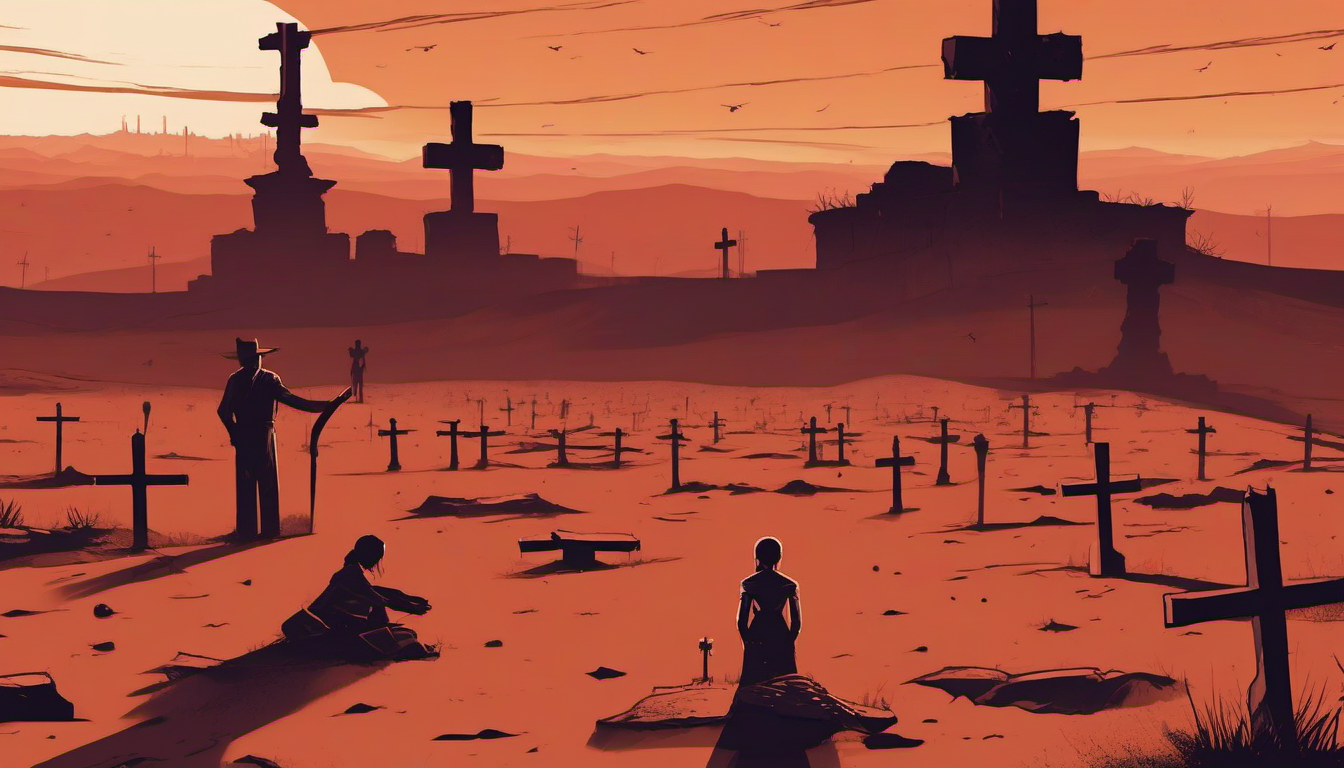
Behind each number lies a story like that of Ángel Montenegro, a 31-year-old construction worker dragged into a white van in Cuautla in August 2022. His mother, Patricia García, has spent more than three years searching. She joined a collective of twelve women who probe the ground with metal rods, looking for buried corpses. They found eleven bodies in fields where Montenegro's phone last pinged. None was her son.
The disappearances capture something the homicide statistics miss. Cartels have learned that murder draws attention; making bodies vanish puts them "under the radar," as Vargas put it. Criminal organizations bury corpses in unmarked graves, burn them to ash, or dissolve them in vats of acid. The violence becomes invisible, but its devastation ripples through tens of thousands of families.
| Metric | Figure | Source |
|---|---|---|
| Registered missing/disappeared | 130,000+ | National Search Commission |
| Increase over 10 years | 200%+ | México Evalúa (Feb 2026) |
| Cumulative homicides under AMLO (2018-2024) | 190,000+ | SWJ/official data |
| Crimes unsolved (2022) | 96% | United Nations |
| Sinaloa Cartel municipal presence | 100+ municipalities | Lantia Intelligence |
| CJNG municipal presence | 350+ municipalities | Lantia Intelligence |
| Estimated cartel network members | ~45,000 | DEA estimates |
Chapter 2: The Cartel State
The conventional narrative frames Mexico's crisis as a "drug war." That framing is dangerously obsolete.
According to a comprehensive February 2026 analysis by the Small Wars Journal (Arizona State University), the principal challenge confronting the Mexican state is "the sustained and, in many regions, expanding capacity of organized criminal groups to exercise territorial control." Drug trafficking remains important, but a growing share of criminal power is rooted in locally embedded economies: extortion, kidnapping, fuel theft, money laundering, arms trafficking, migrant smuggling, and human trafficking. These activities often surpass drug trafficking in their direct economic, political, and social impact on communities.
The two dominant criminal coalitions — the Sinaloa Cartel and the Cártel de Jalisco Nueva Generación (CJNG) — operate as what Lantia Intelligence describes as "criminal corporations." The CJNG's footprint extends across more than 350 municipalities, far exceeding the Sinaloa Cartel's 100+. States including Baja California, Chihuahua, Guanajuato, Guerrero, the State of Mexico, Michoacán, and Morelos exhibit particularly deep social and territorial entrenchment.
But the picture is far more fragmented than a simple two-cartel narrative suggests. The Gulf Cartel, Cártel Santa Rosa de Lima, and Cártel del Noreste coexist with a growing number of splinter factions and semi-autonomous cells. Increasingly, violent confrontations are driven by criminal paramilitary groups focused on extortion and kidnapping with limited direct involvement in transnational drug trafficking.
This diversification is rational. As the Small Wars Journal analysis explains, criminal groups "hedge risk by operating across multiple illicit economies simultaneously." When border enforcement intensifies, drug traffickers expand into extortion. When migration policy shifts, smuggling networks pivot. This adaptive capacity explains why "single-issue enforcement strategies — focused narrowly on drugs, borders, or migration — consistently fail to reduce overall criminal power and violence."
The result is something approaching a parallel state. In hundreds of municipalities, cartels collect taxes (the derecho de piso), regulate commerce, arbitrate disputes, and determine who can run for office. Mexico's 96% impunity rate means that state justice is functionally absent.
Chapter 3: Democracy Under Fire
The 2023-2024 electoral cycle was the deadliest in Mexico's modern history. Now, the 2026 municipal election campaign is following the same trajectory.
In Veracruz, mayoral candidate Yesenia Lara was assassinated alongside three supporters during a rally in Texistepec. In Uruapan, Michoacán, sitting Mayor Carlos Manzo was fatally shot while attending the Festival de las Velas in November 2025. These are not isolated incidents — they represent the systematic infiltration of democratic governance by criminal organizations.
Cartels target candidates for three reasons. First, to eliminate those who threaten their territorial control. Second, to install their own candidates — the narco-candidatos — who will protect criminal operations from within government. Third, to suppress voter turnout through terror, ensuring that low participation produces outcomes favorable to cartel-aligned officials.
Civil society organizations are urging federal authorities to provide greater protection for candidates, warning that unchecked violence "could erode voter confidence ahead of municipal elections." But the fundamental problem is structural: in regions where the state is weaker than the cartels, protection is nearly impossible to provide.
The 2024 general elections consolidated power around Morena and President Claudia Sheinbaum. Her administration inherited 190,000+ cumulative homicides from López Obrador's presidency. The previous administration's response to the disappearances crisis was revealing: ahead of the 2024 elections, AMLO launched an opaque "review" of the disappeared registry, reducing the official count from over 100,000 to just 12,377 — a statistical sleight of hand that sparked outcry from activists and human rights experts.
When asked about the México Evalúa report in February 2026, Sheinbaum was dismissive, saying "that platform has a lot of problems" and promising a new government report. The pattern of denial continues.
Chapter 4: The Terrorism Designation Paradox
In February 2025, the Trump Administration designated six Mexican cartels as Foreign Terrorist Organizations (FTOs). One year later, the results illustrate the paradox of treating a governance crisis as a counterterrorism problem.
Operation Southern Spear — which included maritime strikes killing 128 people, including the controversial "double-tap" strikes on survivors — reportedly reduced drug flows by 33%. The operation included the first US airstrikes in Central America since the 1989 Panama invasion.
But the terrorism designation and military strikes have done nothing to address the structural conditions that produce cartel power:
What the designation achieved:
- 33% reduction in drug flows (per administration claims)
- Legal basis for sanctions, asset seizures, and military action
- Arrest of Maduro in Venezuela (January 2026)
- Pressure on Sheinbaum to cooperate on border security
What the designation has not achieved:
- No reduction in disappearances (still 200%+ over decade)
- No improvement in the 96% impunity rate
- No reduction in cartel territorial control (450+ municipalities)
- No protection for political candidates
- No disruption of extortion, kidnapping, or local criminal economies
- Increased cartel drone incursions into US airspace (El Paso FAA shutdown)
The Corporate Compliance Insights assessment, published one year after the designation, warns that the FTO label creates significant compliance risks for multinational corporations operating in Mexico while failing to reduce the operating environment's fundamental dangers.
The military approach also risks the same paradox that has plagued the "kingpin strategy" for decades: removing top leaders accelerates fragmentation, and fragmentation generates more violence. The Sinaloa Cartel's civil war — triggered by El Mayo Zambada's betrayal — has killed over 4,000 people. Each cartel fracture creates new territorial disputes, new extortion rackets, and new disappearances.
Chapter 5: Scenario Analysis
Scenario A: Accelerating Fragmentation (45%)
Premise: Continued US military pressure and kingpin removals accelerate cartel splintering, producing more violence, not less.
Rationale:
- Historical pattern: Every major kingpin arrest or elimination since 2006 has triggered succession violence
- Sinaloa civil war (Los Chapitos vs La Mayiza) already demonstrates this dynamic, with 4,000+ dead
- CJNG's broad territorial footprint (350+ municipalities) means any internal fracture would have cascading effects
- Trump's escalation to military operations on Mexican soil crosses sovereignty redlines, potentially reducing Mexican cooperation
Trigger: Arrest or elimination of a senior CJNG leader; further US military operations on Mexican territory
Historical precedent: The 2009 killing of Arturo Beltrán Leyva fractured the Beltrán Leyva Organization into multiple warring factions, triggering years of accelerated violence in Guerrero and Morelos.
Timeline: Already underway; intensification over 6-12 months
Scenario B: Managed Accommodation (35%)
Premise: The Sheinbaum administration quietly continues AMLO's "hugs not bullets" approach, accepting cartel territorial control in exchange for reduced violence against the state.
Rationale:
- Morena's supermajority reduces political pressure for a security hard line
- The 190,000 homicides under AMLO were politically sustainable; no electoral punishment
- Mexico's judicial reform (elected judges) risks further cartel penetration of the judiciary, institutionalizing accommodation
- Trump's focus on border security gives Sheinbaum leverage to trade cooperation on migration for autonomy on internal security
Trigger: Sheinbaum signals continuation of AMLO's approach through personnel choices and budget allocations
Historical precedent: Colombia's "paz total" model under Petro attempted simultaneous negotiations with multiple armed groups — with mixed results and significant public backlash.
Timeline: Status quo trajectory; assessed over 2026-2028
Scenario C: Institutional Breakthrough (20%)
Premise: Sheinbaum uses Morena's constitutional majorities to implement genuine security and judicial reforms that reduce impunity.
Rationale:
- Constitutional majority provides unprecedented reform capacity
- Growing public frustration with disappearances and violence creates demand for action
- International pressure (USMCA review, US terrorism designations) creates external incentives
- Some states (Yucatán) demonstrate that better governance can reduce violence
Trigger: Appointment of a credible attorney general; measurable improvement in investigation and prosecution rates
Historical precedent: Colombia's long-term institution-building from the 1990s through 2010s eventually reduced homicide rates by 70%, but required decades and massive US assistance (Plan Colombia, $12 billion+).
Timeline: 5-10 year process; no near-term indicators
Chapter 6: Investment Implications
Mexico's governance crisis creates a fundamental contradiction at the heart of the nearshoring thesis.
Nearshoring paradox: Mexico has attracted record FDI on the thesis that USMCA provides US-adjacent manufacturing capacity. But cartel governance in key manufacturing states (Guanajuato, Jalisco, State of Mexico) means that companies face extortion, logistics disruptions, and reputational risk. The Vizsla Silver mine massacre demonstrated that even extractive industries with significant security infrastructure are vulnerable.
Affected sectors:
- Mining/Resources: 97% of mining companies report criminal victimization (Mexican mining chamber data). Silver production (24% global share) faces direct cartel taxation
- Manufacturing/Nearshoring: Guanajuato and Jalisco — two top manufacturing states — are among the most cartel-penetrated. Supply chain insurance premiums rising
- Tourism: Violence in resort-adjacent areas (Guerrero, Quintana Roo) constrains one of Mexico's largest revenue sources
- Real estate: Laundered cartel money distorts property markets in major cities
Risk assessment: The FTO designation compounds these risks by creating potential sanctions exposure for companies operating in cartel-controlled areas. Any entity that inadvertently provides "material support" to a designated terrorist organization — even through extortion payments — faces US criminal liability.
Hedge positions:
- Overweight companies with operations in low-violence Mexican states (Yucatán, Querétaro)
- Underweight single-asset exposure to high-risk states
- Consider political risk insurance (Lloyd's, Zurich) for Mexico-dependent supply chains
- Monitor USMCA July 2026 mandatory review for sovereignty-related provisions
Conclusion
Mexico's 130,000 disappeared represent more than a security statistic. They represent the quiet dissolution of the social contract in North America's second-largest economy. Each unmarked grave, each dissolved body, each family probing the earth with metal rods marks another point where the state has surrendered its most basic function: the protection of its citizens.
The terrorism designation and military strikes address the symptom — drug flows — while ignoring the disease: a state that cannot investigate 96% of crimes, cannot protect candidates for public office, and has effectively ceded territorial control of hundreds of municipalities to criminal organizations.
One year after the FTO designation, the verdict is clear: you cannot bomb your way out of state failure. The disappeared are still disappearing. The mothers are still searching. And the parallel state grows stronger with each passing day.
Sources: México Evalúa (Feb 2026), The Guardian, Small Wars Journal/ASU, Yucatan Times, Corporate Compliance Insights, Lantia Intelligence, DEA, UNODC, Wikipedia
Leave a Reply