
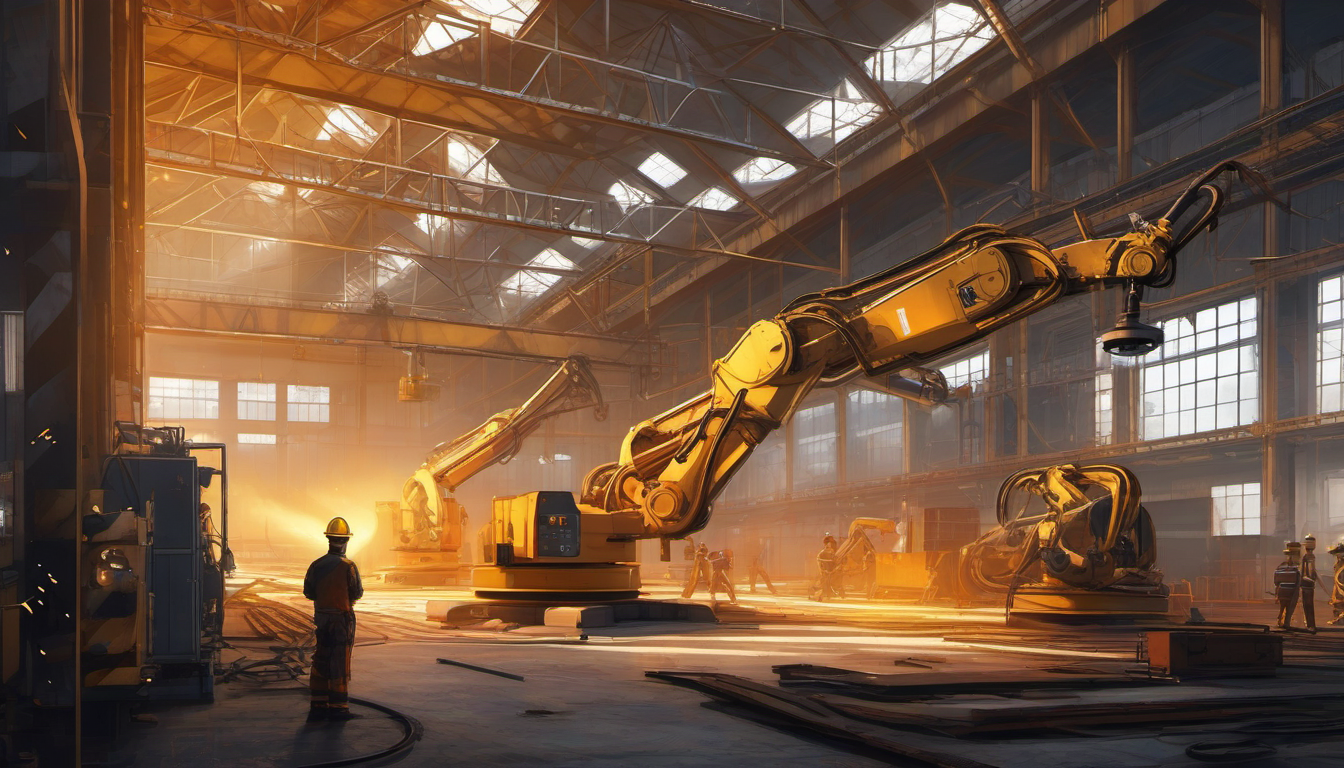
After 42 months of contraction, the eurozone's factory floor is humming again — but the revival masks a deepening Franco-German divergence that could reshape ECB policy and European competitiveness
Executive Summary
- Germany's manufacturing PMI crossed into expansion (50.7) for the first time since mid-2022, ending a 42-month contraction streak — the longest in the country's post-reunification history. Defense spending and infrastructure outlays, not organic demand, are the primary catalysts.
- The eurozone composite PMI rose to 51.9, with manufacturing at a 44-month high of 50.8, while France stagnates near contraction at 49.9 — creating a two-speed Europe that complicates ECB rate decisions.
- This is not a cyclical bounce but a structural fiscal pivot: Germany's Schuldenbremse suspension and €152.8 billion defense commitment through 2029 represent the most significant fiscal expansion since reunification, with ripple effects across European industrial supply chains.
Chapter 1: The End of the Longest Slump
On February 20, 2026, the flash HCOB Eurozone Manufacturing PMI — compiled by S&P Global and Hamburg Commercial Bank — registered 50.8, crossing the 50-point threshold that separates contraction from growth for only the second time in three and a half years. The reading exceeded market expectations of 49.8.
But the headline number obscures the real story. Germany, Europe's industrial heartland and the economy most synonymous with the continent's manufacturing malaise, drove the entire rebound. The German manufacturing PMI surged to 50.7 from 49.1, its first expansionary reading since June 2022.
To appreciate the significance, consider the timeline. German manufacturing entered contraction in July 2022, when surging energy costs from the Russia-Ukraine war collided with weakening Chinese demand and post-pandemic supply chain disruptions. For 42 consecutive months, the sector shrank — a streak unprecedented in the history of the PMI survey, which dates back to 1996. During the global financial crisis of 2008-2009, the contraction lasted 14 months. During the eurozone debt crisis, 8 months. This was something qualitatively different: not a cyclical downturn but what many analysts feared was structural deindustrialization.
The Bundesbank itself had warned in 2025 that Germany risked permanently losing industrial capacity. Automotive giants — Volkswagen, BMW, Mercedes-Benz — announced tens of thousands of layoffs. BASF shifted investment to China. ThyssenKrupp's steel division shed 11,000 jobs. The narrative of Germany as the "sick man of Europe" — a label first applied in 1998 — had returned with vengeance.
Now, something has changed. New orders returned to moderate growth after three months of contraction. Export orders strengthened after six months of decline. Order backlogs rose for the first time since mid-2022 — a leading indicator that output momentum has room to build.
"German industry is growing again," said Dr. Cyrus de la Rubia, chief economist at Hamburg Commercial Bank. He attributed the turnaround to "higher public spending on infrastructure and defence, combined with stronger foreign demand."
Chapter 2: The Fiscal Bazooka — Defense as Industrial Policy
The recovery is not a story of market forces healing themselves. It is a story of the state stepping in where the market retreated.
The Schuldenbremse Revolution
Germany's debt brake — the constitutionally enshrined Schuldenbremse — had been the country's fiscal religion since its adoption in 2009. For over a decade, it constrained public investment, contributing to crumbling roads, outdated digital infrastructure, and underequipped armed forces. Chancellor Friedrich Merz, who took office promising fiscal discipline, made an extraordinary U-turn within hours of his election: he suspended the Schuldenbremse for defense spending and authorized debt-financed special funds (Sondervermögen).
The numbers are staggering. Germany has committed €152.8 billion to defense by 2029 — two and a half times its 2025 defense budget. This is layered on top of the €100 billion Bundeswehr modernization fund established in 2022 and the EU's €150 billion SAFE (Security Action for Europe) bond program, which was oversubscribed when it launched in early 2026.
Goldman Sachs, in an analysis published February 18, called this "Germany's long-awaited fiscal stimulus" but cautioned about execution risks: procurement bottlenecks, labor shortages, and the gap between appropriation and actual spending. The bank estimated that only 60-70% of planned defense expenditure would be deployed on schedule in 2026.
The Industrial Multiplier
Defense spending doesn't just buy tanks and fighter jets. It cascades through industrial supply chains. Rheinmetall, the defense conglomerate, has expanded its workforce by 15,000 since 2024 and opened new production lines for artillery shells, armored vehicles, and air defense systems. Hensoldt, the sensor specialist, has tripled its order book. KNDS (the Franco-German tank manufacturer) is ramping production of the Leopard 2A8.
But the multiplier extends far beyond pure defense contractors. Steel producers receive orders for armor plate. Semiconductor firms supply electronics. Logistics companies move materiel. Machine tool makers — the Mittelstand firms that form Germany's industrial backbone — produce the precision equipment that defense factories require.
Infrastructure spending amplifies the effect. Germany's coalition has committed to accelerated bridge repairs (12,000 bridges classified as in poor condition), rail network modernization (Deutsche Bahn's €80+ billion program), and digital infrastructure expansion. These projects demand cement, steel, electrical components, and heavy machinery — precisely the goods that German manufacturers produce.
| Driver | Estimated Annual Impact | Timeline |
|---|---|---|
| Defense procurement | €30-40B/year by 2028 | Ramping now |
| Infrastructure fund | €20-25B/year | 2026-2030 |
| EU SAFE bond spending | €10-15B to Germany | 2026-2029 |
| SCOTUS tariff ruling trade rebalancing | Uncertain | Emerging |
Chapter 3: The French Paradox — Europe's Other Engine Stalls
While Germany's industrial engine restarts, France is sputtering. The French composite PMI stood at 49.9 in February — technically below the expansion threshold, indicating that the eurozone's second-largest economy is broadly stagnating.
French manufacturing slipped back into contraction after briefly expanding in January. Services output declined. Export orders weakened further. Hiring activity stagnated.
"The main drag continues to come from the demand side as new orders declined yet again, with the situation looking even worse for export orders," said Jonas Feldhusen, junior economist at Hamburg Commercial Bank.
Structural vs. Cyclical
France's malaise is partly structural. The country's industrial base is smaller than Germany's (manufacturing accounts for roughly 10% of GDP vs. 19% in Germany), so the defense spending windfall generates less domestic multiplier effect. France is a major arms exporter — Dassault, Thales, Naval Group — but much of this production was already at capacity. The Rafale production line, expanded for India's 114-jet order, is booked through the early 2030s.
More troubling is France's fiscal position. With a budget deficit exceeding 5% of GDP and public debt above 112%, Paris has limited room for the kind of fiscal expansion Berlin is deploying. President Macron's attempts to pass austerity-lite budgets have faced parliamentary gridlock, with Marine Le Pen's National Rally blocking or extracting concessions from every major fiscal measure.
The Franco-German divergence matters because it has historically been the engine of European integration. When Germany and France move in sync, the EU advances. When they diverge — as with the eurozone crisis of 2010-2015 — institutional paralysis follows.
The Two-Speed ECB Dilemma
For the European Central Bank, the gap creates a genuine policy puzzle. Germany's recovery is accompanied by renewed cost pressures: input costs rose at the fastest pace since December 2022, driven by energy prices (crude oil and natural gas up 12-14% in euro terms since January). This suggests inflation could reaccelerate if the recovery broadens.
France, meanwhile, needs easier monetary conditions. French service providers cut prices for the first time in three months, and demand weakness argues for rate cuts.
The ECB cannot set different interest rates for different countries. A rate suited to Germany's fiscal expansion may be too tight for France's stagnation — echoing the "one size fits none" critique that has plagued the eurozone since its inception.
Chapter 4: Scenario Analysis
Scenario A: Sustained Industrial Renaissance (35%)
Thesis: Defense and infrastructure spending create a durable industrial recovery that spreads from Germany to Central European supply chains (Poland, Czech Republic, Hungary). Manufacturing employment stabilizes, capital investment recovers, and Europe narrows its productivity gap with the US.
Catalysts:
- EU SAFE bond proceeds deployed faster than expected
- SCOTUS IEEPA ruling reduces US tariff pressure, boosting European export competitiveness
- Energy costs stabilize as new LNG capacity comes online
Historical precedent: South Korea's industrialization through state-directed defense spending in the 1970s-80s, where military procurement bootstrapped civilian industrial capabilities. Germany's own post-reunification industrial integration, where massive public investment in eastern Germany sustained western manufacturers for a decade.
Probability rationale: Defense spending commitments are legally binding, providing a demand floor. But execution risks (Goldman's 60-70% deployment estimate) and the narrow base of the recovery (Germany-centric) limit the probability of a broad renaissance.
Scenario B: Two-Speed Stagnation (45%)
Thesis: Germany's defense-driven recovery proves narrow and does not spill over to civilian manufacturing or to the rest of the eurozone. France continues to stagnate. The ECB, caught between German inflation and French weakness, holds rates steady, satisfying neither.
Catalysts:
- Chinese demand remains weak, limiting export recovery
- Energy prices spike again (Iran conflict, Russia supply disruptions)
- French political gridlock blocks fiscal coordination
- US trade policy uncertainty persists despite SCOTUS ruling (Section 122 tariffs, Section 301 investigations)
Historical precedent: Japan's "Lost Decade" manufacturing recoveries in 1996 and 2000 — brief PMI expansions driven by fiscal stimulus that faded once government spending plateaued, because underlying demographic and structural challenges remained unaddressed.
Probability rationale: This is the most likely outcome because European manufacturing faces headwinds beyond what defense spending can solve: energy costs 3-4x US levels, demographic decline, AI-driven automation substituting for European engineering advantages, and Chinese overcapacity flooding global markets.
Scenario C: Fiscal Overheating and Bond Market Stress (20%)
Thesis: Germany's fiscal expansion, combined with EU-level defense bonds (SAFE) and national infrastructure programs, triggers a bond market repricing. JGB-style stress spreads to European sovereign debt. The ECB is forced to choose between supporting bond markets and fighting inflation.
Catalysts:
- Germany's debt-to-GDP ratio rises sharply from 63% toward 70%+
- Italian and French spreads widen as markets question fiscal sustainability
- Defense spending exceeds absorption capacity, driving input inflation
- Global bond market stress (US Treasury volatility, JGB crisis) spills over
Historical precedent: The Truss mini-budget crisis in the UK (September 2022), where unfunded fiscal expansion triggered a gilt market crisis within 48 hours. Germany's superior fiscal starting position makes a Truss-scale crisis unlikely, but the direction of risk is similar.
Probability rationale: Germany starts from a strong fiscal position (63% debt-to-GDP vs. 112% France, 140% Italy), giving substantial buffer. But the combination of defense spending, infrastructure investment, and SAFE bonds represents a regime change in European fiscal policy that markets have not yet fully priced.
Chapter 5: Investment Implications
Winners
European defense industrials: Rheinmetall, KNDS, Hensoldt, Leonardo, BAE Systems, Thales. The order pipeline extends into the 2030s with sovereign guarantees. This is a structural rerating, not a cyclical trade.
German Mittelstand suppliers: Machine tool manufacturers (DMG Mori, Trumpf), industrial automation (Siemens), electrical components (Infineon, STMicroelectronics). These firms benefit from both defense and infrastructure spending.
European banks: Higher interest rates combined with increased lending demand from industrial expansion. Deutsche Bank and Commerzbank have direct exposure to German industrial lending.
Losers
French consumer discretionary: Stagnant demand and potential fiscal tightening weigh on domestic consumption. LVMH and Kering face a European demand drag on top of Chinese weakness.
European utilities exposed to gas: Rising energy costs are a tax on non-defense manufacturing. Energy-intensive industries (chemicals, glass, ceramics) face margin compression.
Long-duration European bonds: The fiscal expansion narrative argues for steeper yield curves and wider peripheral spreads.
Key Metrics to Watch
| Indicator | Current | Threshold | Significance |
|---|---|---|---|
| German manufacturing PMI | 50.7 | 52+ for 3 months | Confirms sustained recovery |
| German new export orders | Expanding | Sustained growth | Signals demand beyond fiscal |
| France composite PMI | 49.9 | Below 48 | Recession signal |
| German 10Y Bund yield | ~2.8% | Above 3.5% | Fiscal stress signal |
| EUR/USD | ~1.09 | Above 1.15 | Competitive pressure |
Conclusion
February's PMI data marks a genuine inflection point — the end of Europe's longest industrial contraction. But it is an inflection built on fiscal gunpowder, not organic demand. Germany's manufacturing renaissance is real, but it is a government-directed revival fueled by defense spending and infrastructure investment, not a market-driven recovery.
The deeper question is whether fiscal stimulus can bridge the gap until structural reforms — energy policy, digital infrastructure, labor market flexibility — take effect. History offers mixed lessons. South Korea and postwar Germany succeeded in using defense-industrial policy to catalyze broader competitiveness. Japan's repeated stimulus programs failed because they substituted for, rather than complemented, structural reform.
Europe's two-speed recovery also tests the institutional architecture of the eurozone. A Germany that grows at 1.5% while France stagnates at 0.3% strains the ECB's one-size-fits-all monetary policy and risks reigniting the political tensions that nearly broke the eurozone in the early 2010s.
For investors, the signal is clear: Europe's industrial base is not dead, but its recovery is narrow, fiscally dependent, and geographically uneven. The defense spending supercycle provides a demand floor that was absent for the past three years. Whether it becomes a launch pad for broader renewal depends on choices that European leaders have historically deferred.
Sources: S&P Global/HCOB Flash PMI (February 2026), Hamburg Commercial Bank, Goldman Sachs Research, Bundesbank Monthly Report, Euronews, Bloomberg
Leave a Reply