
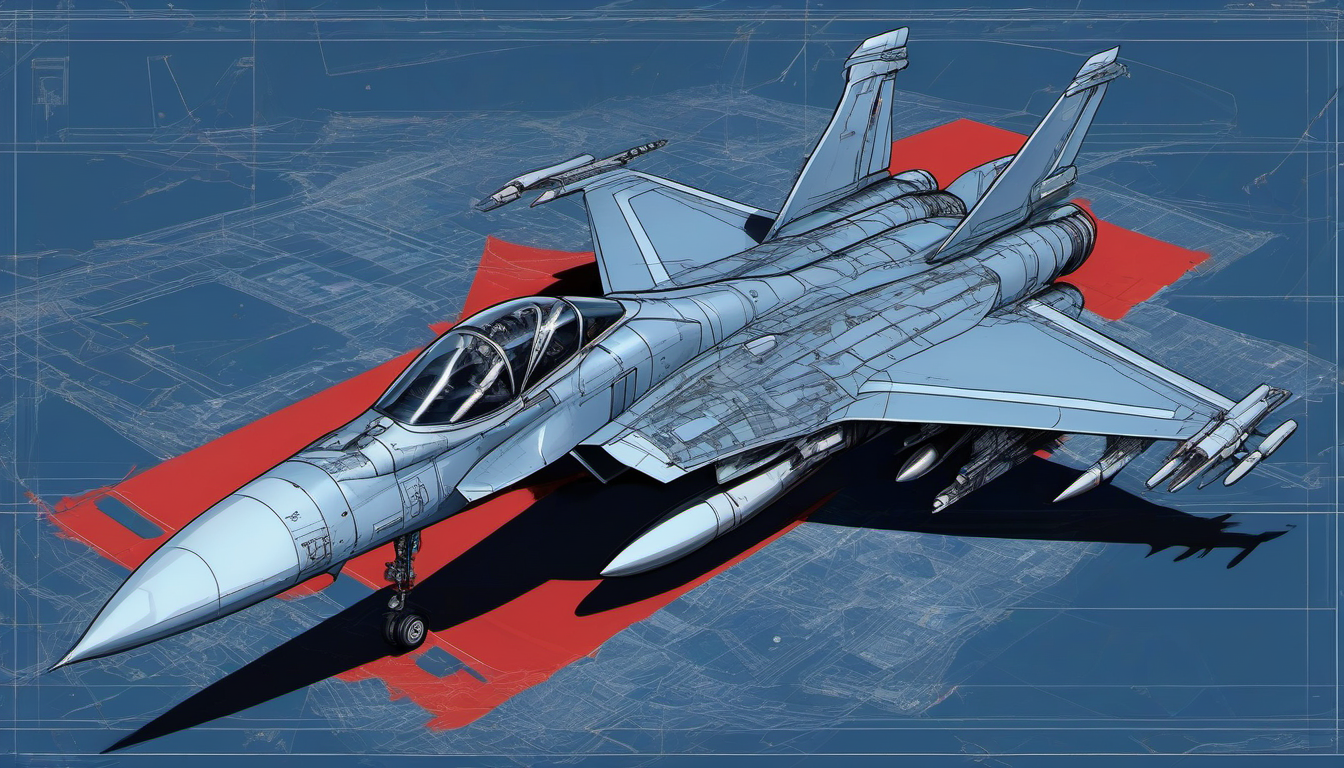
As Merz declares Germany doesn't need France's fighter, Europe's flagship defense project unravels — exposing the fatal gap between rearmament rhetoric and industrial reality
Executive Summary
- Germany's Chancellor Merz has effectively killed the Franco-German-Spanish Future Combat Air System (FCAS/SCAF), the €100 billion flagship of European defense autonomy, by publicly declaring Berlin has fundamentally different fighter jet requirements than Paris.
- Germany is now seeking additional F-35 orders from Lockheed Martin — the ultimate irony for a program born to reduce European dependence on American weapons systems.
- The collapse reveals a structural paradox at the heart of European rearmament: the continent is spending more on defense than ever, but the money is increasingly flowing to Washington rather than building sovereign European capability.
Chapter 1: The Unraveling
On February 18, 2026, Chancellor Friedrich Merz delivered what defense analysts are calling the death sentence for Europe's most ambitious military-industrial project. In a podcast interview with Machtwechsel, Merz stated plainly: "The French need, in the next generation of fighter jets, an aircraft capable of carrying nuclear weapons and operating from an aircraft carrier. That's not what we currently need in the German military."
The words were diplomatic. The implications were devastating.
The Future Combat Air System — known as FCAS in English, SCAF (Système de Combat Aérien du Futur) in French — was launched with fanfare by Emmanuel Macron and Angela Merkel in 2017. It represented the pinnacle of Franco-German defense cooperation: a sixth-generation fighter jet, accompanied by loyal wingman drones and a revolutionary "combat cloud" digital backbone, all scheduled to replace France's Rafale and Germany and Spain's Eurofighter fleets by 2040.
Nine years later, not a single prototype has flown. The program has consumed billions in study contracts while Dassault Aviation and Airbus Space and Defence engaged in increasingly bitter disputes over workshare, intellectual property, and control of the airframe design. Dassault's CEO Eric Trappier insisted his company could build the jet alone. Airbus demanded equal partnership. The impasse became permanent.
Within 24 hours of Merz's remarks, Reuters reported exclusively that Germany is actively seeking additional F-35 Lightning II jets from Lockheed Martin — the very American dependency the FCAS was designed to end.
Chapter 2: The Requirement Divergence
The technical disagreement at the heart of FCAS was real, not manufactured. France and Germany genuinely need different aircraft, and the gap has only widened since 2017.
France's requirements reflect its unique strategic posture as Europe's only independent nuclear power and the operator of a nuclear-powered aircraft carrier, the Charles de Gaulle (with successor PANG under construction). Paris needs a carrier-capable, nuclear-weapon-certified stealth fighter — essentially a next-generation Rafale. Dassault, the only company in Europe with experience building such aircraft, naturally positioned itself as the indispensable lead.
Germany's requirements are fundamentally different. The Bundeswehr needs a land-based air superiority and strike platform to replace its Eurofighter Typhoons. Germany has no aircraft carriers and no independent nuclear weapons (its nuclear sharing arrangement uses American B61 bombs, soon to be delivered by F-35As). Berlin's priority is interoperability with NATO — which means interoperability with American systems.
Spain's position further complicated matters. Madrid needed a Eurofighter replacement but lacked the industrial heft to mediate between Dassault and Airbus. Indra Sistemas, Spain's lead contractor, was relegated to minor subsystems.
| Requirement | France | Germany | Spain |
|---|---|---|---|
| Carrier capability | Essential | Not needed | Not needed |
| Nuclear certification | Essential (ASMP-A) | Not needed (uses F-35) | Not needed |
| Primary role | Multi-role, sovereignty | Air superiority, NATO integration | Eurofighter replacement |
| Industrial lead | Dassault | Airbus | Indra |
| Budget pressure | Severe (deficit 5.8% GDP) | Massive new spending (€100B+ fund) | Moderate |
The two-fighter solution proposed by Airbus CEO Guillaume Faury on February 19 — building separate French and German variants sharing common drone and cloud components — acknowledged reality. But it also doubled the cost while halving the economies of scale.
Chapter 3: The Irony of Rearmament
Europe is in the midst of its most dramatic military buildup since the Cold War. NATO allies are pushing toward a 5% GDP defense spending target. The EU's SAFE bond program has been massively oversubscribed. Germany alone has committed over €100 billion in special defense funds. Japan has rewritten its pacifist constitution. The rhetoric of "European strategic autonomy" has never been louder.
Yet the FCAS collapse exposes a brutal truth: the rearmament money is not building European defense sovereignty. It is subsidizing American defense contractors.
Consider Germany's trajectory since 2022:
- 2022: Ordered 35 F-35A Lightning IIs from Lockheed Martin (€8 billion)
- 2024: Ordered 20 Boeing CH-47F Chinook helicopters (€3.5 billion)
- 2025: Selected Boeing P-8A Poseidon for maritime patrol
- 2026: Now seeking 35+ additional F-35s (~$80 million each, or approximately €3 billion)
- 2026: FCAS joint fighter effectively abandoned
France is watching this with alarm. "We Europeans, if we understand the direction history is taking us, have an interest in standardising, simplifying and therefore having a common model," Macron said from India on February 19, his diplomatic language barely concealing frustration.
The Franco-German defense rift is not new — it mirrors the broader economic divergence. Germany's industrial model prioritized cost efficiency and NATO compatibility. France's model prioritized sovereignty and technological independence. These approaches coexisted during peacetime. Under the pressure of actual rearmament spending, they have proven incompatible.
Chapter 4: The Alternative Partners
Merz's comment that "there are other countries in Europe ready to work with Berlin" pointed to the most likely successor arrangement: a German-Swedish partnership.
Saab, the Swedish defense company behind the Gripen fighter, has long been considered a natural partner for Germany. Sweden shares Germany's emphasis on land-based operations, NATO integration, and cost efficiency. Saab has already begun preliminary work on a next-generation fighter concept. A German-Swedish fighter, potentially incorporating elements of the BAE Systems Tempest program (now GCAP, the UK-Italy-Japan joint venture), could create a "northern European" fighter bloc.
The emerging European fighter jet landscape now looks like three competing programs:
| Program | Partners | Status | Timeline |
|---|---|---|---|
| FCAS/SCAF | France (+ Spain?) | Collapsing | 2040+ (if ever) |
| GCAP (Tempest) | UK, Italy, Japan | Phase 2 design | 2035 |
| Possible new program | Germany, Sweden, others? | Concept phase | 2040+ |
| F-35 (purchase) | 18+ NATO nations | In production | Now |
The GCAP consortium has an inherent advantage: it is already moving. The Franco-German impasse consumed nine years of precious development time. In aerospace, time is the most expensive resource of all.
Meanwhile, F-35 continues its inexorable march. With over 1,000 delivered globally and 18 NATO operators, the jet has achieved the network effects that European alternatives cannot match. Every additional F-35 buyer makes the next European fighter project slightly less viable.
Chapter 5: Scenario Analysis
Scenario A: Managed Divorce — FCAS Splits into Drones + Cloud (45%)
Rationale: Merz and Macron agreed on February 19 to reach a final decision on FCAS by end of 2026. The most likely outcome is preserving the drone and combat cloud pillars while killing the joint manned fighter. This saves political face while acknowledging industrial reality.
Historical precedent: The 1980s European Fighter Aircraft (EFA) program similarly fractured when France withdrew in 1985 to build the Rafale independently, while Germany, UK, Italy, and Spain produced the Eurofighter. Both programs ultimately succeeded — but at double the cost.
Trigger conditions: Macron accepts the two-fighter solution; Dassault secures French government funding for an independent next-gen Rafale; Airbus partners with Saab.
Scenario B: Full Collapse — F-35 Dominance (30%)
Rationale: If Germany's additional F-35 order materializes and GCAP progresses, the business case for any new European fighter evaporates. France finds itself isolated, unable to fund a €50+ billion program alone while its budget deficit exceeds 5% of GDP.
Historical precedent: The post-Cold War peace dividend killed multiple European defense programs (NFR-90 frigate, MEADS air defense). Budget pressure always wins over sovereignty rhetoric eventually.
Trigger conditions: French budget crisis deepens; Dassault pivots to Rafale F5 upgrade; Spain joins GCAP or buys F-35.
Scenario C: Surprise Revival — Political Will Overrides Industry (25%)
Rationale: A major geopolitical shock — such as a US withdrawal from NATO commitments or a Taiwan crisis disrupting F-35 supply chains — could force Franco-German reconciliation. The logic of European sovereignty would override industrial disputes.
Historical precedent: The 2022 Russian invasion of Ukraine created Germany's Zeitenwende. A similar shock could create a defense-industrial Zeitenwende.
Trigger conditions: US signals F-35 supply restrictions; Trump demands defense technology offsets; ITAR restrictions tighten.
Chapter 6: Investment Implications
The FCAS collapse creates clear winners and losers across the defense-industrial landscape.
Winners:
- Lockheed Martin (LMT): Additional F-35 orders from Germany, plus growing European customer base. The F-35 program's revenue visibility extends through the 2050s.
- Saab (SAAB-B.ST): Potential German partnership dramatically elevates its strategic position. Gripen E exports and next-gen fighter participation could double its defense revenue.
- BAE Systems (BA.L): GCAP consortium gains strategic advantage as the only actively progressing European sixth-gen program. Tempest becomes Europe's de facto fighter of the future outside France.
- Leonardo (LDO.MI): GCAP Italian pillar benefits; potential Spanish accession adds scale.
Losers:
- Airbus (AIR.PA): Loses the fighter jet crown jewel. Combat aircraft division faces existential questions without a next-gen manned platform.
- Dassault Aviation (AM.PA): Must fund a next-gen Rafale largely alone. French defense budget constraints make this increasingly difficult.
- Indra Sistemas (IDR.MC): Spain's role diminishes without FCAS framework.
Broader implications: The European defense ETFs (EUAD, NATO) may see rotation from industrial/manufacturing exposure toward systems integration and American platform operators. The €150 billion SAFE defense bond program increasingly finances American hardware purchases rather than European production — a politically explosive dynamic that has yet to fully register with EU policymakers.
Conclusion
The death of SCAF is not merely the failure of an aircraft program. It is the exposure of a fundamental contradiction at the heart of European defense: the continent is spending record sums on military capability while systematically undermining its ability to produce that capability independently.
Macron's vision of a single European fighter jet was always more political than technical. It required France and Germany to subordinate their divergent strategic cultures to a common industrial project — precisely the kind of sovereignty-pooling that European integration has struggled to achieve in far less sensitive domains.
The result is a Europe that talks sovereign defense while buying American, that proclaims strategic autonomy while deepening strategic dependence. The €100 billion that FCAS was meant to channel into European aerospace will now flow largely across the Atlantic, funding F-35 production lines in Fort Worth, Texas.
For investors, the message is clear: bet on the defense companies that build what Europe actually buys, not what Europe says it wants to build. The gap between rhetoric and procurement has never been wider — and in defense, procurement always wins.
Sources: Reuters, Euronews, Le Monde, Aerotime, Breaking Defense, CNBC
Leave a Reply