
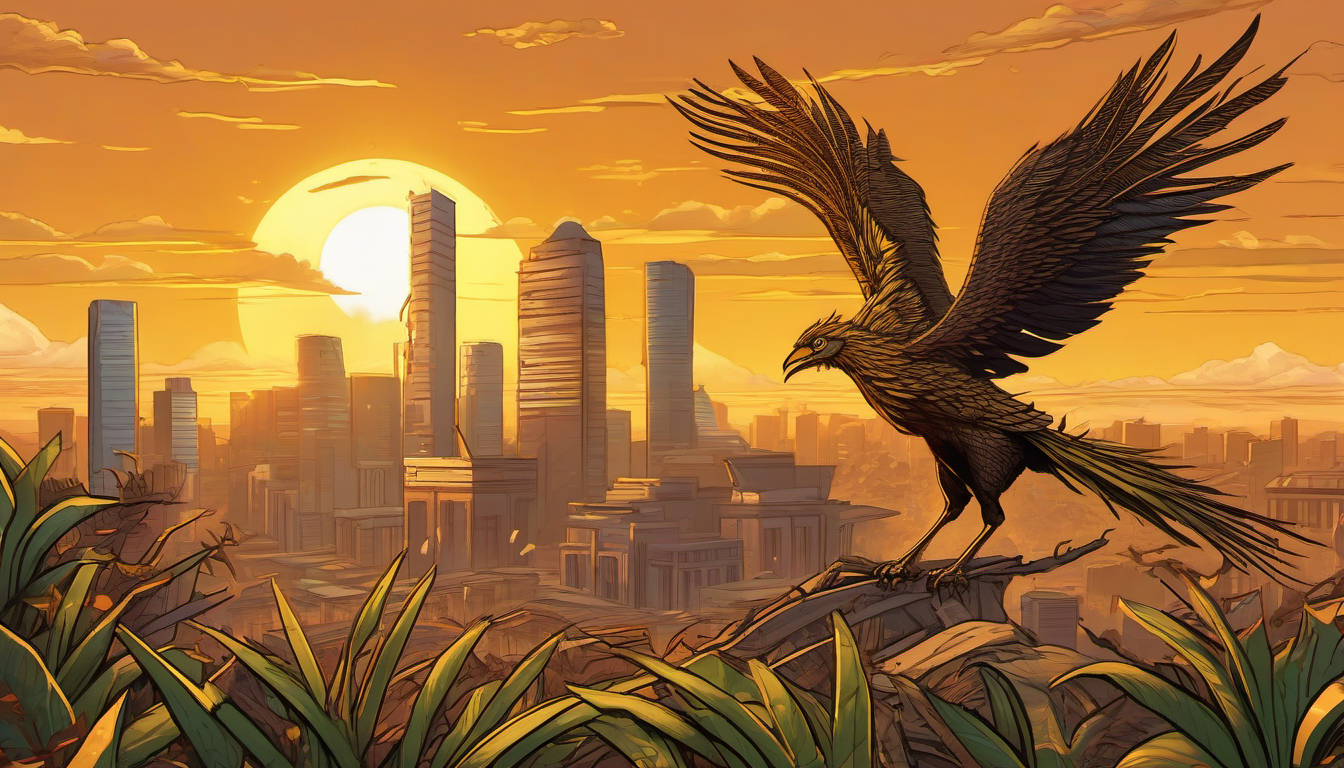
Double-digit growth returns to a war-scarred nation — but the miracle rests on a powder keg
Executive Summary
- Ethiopia projects 10.2% GDP growth this fiscal year — its first double-digit expansion since the Tigray civil war that killed over 600,000 people and cost $28 billion in damages.
- IMF-backed reforms including currency flotation, banking liberalization, and subsidy removal have unlocked $2.2 billion in disbursements while coffee exports nearly doubled to $2.6 billion.
- Yet the economic miracle is built atop a ticking geopolitical time bomb: Eritrean troops remain in Tigray, clashes erupted in January 2026, Egypt arms Somalia against Ethiopia over the GERD dam, and RSF training camps operate on Ethiopian soil — any escalation could shatter the fragile recovery.
Chapter 1: From Ashes to Double Digits
In February 2026, Ethiopia stands as perhaps the most paradoxical economy on the planet. Prime Minister Abiy Ahmed announced that GDP growth would hit 10.2% this fiscal year — a figure that would make Ethiopia one of the fastest-growing economies in the world. The IMF largely confirmed this trajectory, projecting 9.2-9.3% growth in its fourth ECF review, and approved a further $261 million disbursement in January 2026, bringing total payouts under the $3.4 billion program to $2.18 billion.
The numbers are remarkable for a country that just three years ago was tearing itself apart. The Tigray civil war (2020-2022) killed an estimated 600,000 people — roughly equivalent to the death toll of the entire Syrian civil war compressed into two years. Economic losses exceeded $28 billion. Over 1 million people in northern Ethiopia still rely on humanitarian aid. Nearly 800,000 displaced Tigrayans remain in temporary shelters with limited access to basic services.
How did Ethiopia engineer such a rapid rebound?
The answer lies in a sweeping reform program launched in July 2024, designed and monitored by the IMF, that fundamentally restructured how the Ethiopian economy operates. The reforms constitute the most ambitious economic liberalization in Sub-Saharan Africa since South Africa's post-apartheid transition.
Chapter 2: The Reform Shock
Currency Flotation: The Big Bang
The centerpiece reform was the decision to float the Ethiopian birr, ending decades of state-managed exchange rates. The National Bank of Ethiopia (NBE) shifted from a fixed to a market-based exchange rate regime — a move that severely devalued the currency and cost the central bank 407.1 billion birr ($2.61 billion) in losses, according to NBE's own accounting.
The devaluation was painful. Inflation, which had averaged 26.6% in 2023/24, remained elevated. Fuel subsidies were gradually phased out, with diesel and gasoline prices rising approximately 43% and 42% respectively since early 2025. Full subsidy elimination was targeted for the end of February 2026.
But the trade-off was exactly what the IMF had predicted: exports surged. Coffee export earnings nearly doubled from $1.43 billion to $2.6 billion in a single fiscal year. Gold shipments exploded from 4 to 37 tons, accounting for 42% of export revenue — a temporary boon driven by record global gold prices above $5,000 per ounce.
Opening the Gates
Ethiopia simultaneously opened three previously closed sectors to foreign competition:
| Sector | Pre-Reform Status | Post-Reform Status |
|---|---|---|
| Banking | State monopoly; no foreign banks | Foreign banks permitted; licensing underway |
| Telecommunications | Ethio Telecom monopoly | Partial privatization; Safaricom entered |
| Real Estate | Restricted foreign ownership | Foreign investors permitted |
Foreign reserves climbed from covering just three weeks of imports to 1.9 months — still low by international standards, but a dramatic improvement for a country that had been essentially broke.
The Sovereign Wealth Machine
Ethiopian Investment Holdings (EIH), the state sovereign wealth fund formed four years ago, has become a surprisingly effective engine of modernization. Under CEO Brook Taye, EIH consolidated 41 state-owned enterprises — including Ethiopian Airlines, Ethio Telecom, and Ethiopian Electric Power — many of which were hemorrhaging money at the time.
The results have been impressive:
- Portfolio revenues tripled to 2.1 trillion birr
- Profitability rose 50% on average
- Tax contributions surged from 34 billion to 228 billion birr (nearly 40% of national tax revenue)
- $49 billion in foreign currency generated since inception
- 36 large-scale projects worth over $5 billion underway
Among the most ambitious: a $3 billion fertilizer plant partnership with Nigerian billionaire Aliko Dangote, domestic passport production, and smart-tablet assembly. EIH's expansion strategy explicitly mirrors Ethiopian Airlines' regional growth model — pushing subsidiaries into other African markets.
Chapter 3: The Coffee-Gold Paradox
Ethiopia's export surge tells a story of both structural transformation and dangerous dependency.
Coffee, Ethiopia's ancestral crop and the origin of the global coffee industry, has been the star performer. Ethiopia diversified its export markets amid suspension from the African Growth and Opportunity Act (AGOA) in 2022 over human rights concerns related to the Tigray war. Despite facing 10% tariffs from the Trump administration, Ethiopia pivoted aggressively toward Asian and Gulf markets, launching its first coffee trading center with China.
The coffee sector's success reflects genuine structural improvement — better processing, higher-quality beans, new markets. But gold's 42% share of export revenue is a warning sign. Global gold prices at $5,000+ are historically anomalous, driven by central bank de-dollarization, geopolitical risk premiums, and the Kevin Warsh Fed uncertainty. A normalization of gold prices — even to $4,000 — would blow a significant hole in Ethiopia's current account.
| Export Category | 2023/24 | 2024/25 | Change |
|---|---|---|---|
| Coffee | $1.43B | $2.6B | +82% |
| Gold | ~$0.3B | ~$3.0B+ | +900%+ |
| Other | ~$2.0B | ~$2.5B | +25% |
The gold dependency creates a fragile foundation. Ethiopia's "miracle" growth rate is significantly inflated by commodity windfalls that may not persist. Strip out the gold effect, and growth is still strong — perhaps 6-7% — but not the headline-grabbing double digits that attract international capital.
Chapter 4: The Powder Keg Beneath the Miracle
Ethiopia's economic renaissance is unfolding atop one of the most complex geopolitical landscapes in Africa. The International Crisis Group published a briefing in February 2026 titled "Ethiopia, Eritrea, and Tigray: A Powder Keg in the Horn of Africa," warning that the risk of renewed hostilities remains high.
The Eritrea Time Bomb
Eritrean troops remain in Tigray three years after the Pretoria Agreement that was supposed to end the civil war. In late January 2026, clashes erupted between Tigrayan forces and Ethiopian federal troops. Eritrea, which still occupies parts of western Tigray, has made overtures to the TPLF — the very faction it fought alongside Abiy Ahmed to defeat.
The reversal is breathtaking. Eritrean President Isaias Afwerki, who initially allied with Abiy to crush the TPLF, now appears to be hedging by engaging with his former enemies. The Africa Center's analysis notes that concerns about Ethiopia establishing a port in Berbera, Somaliland, or attempting to seize Assab in Eritrea have "ratcheted up tensions in the region."
The GERD Dam Gambit
Ethiopia's Grand Ethiopian Renaissance Dam (GERD) on the Blue Nile remains the most consequential infrastructure project in Africa. Egypt views the dam as an existential threat to its water supply. The two countries have been unable to reach a binding agreement on filling and operation protocols.
Egypt has responded by elevating military support to Somalia — Ethiopia's regional rival — creating a proxy containment strategy. Ethiopian military intelligence reports from Reuters exposed secret RSF training camps in Ethiopia's Benishangul-Gumuz region, just 100 kilometers from the GERD, adding another layer of combustibility.
The Sudan Shadow
Ethiopia's hosting of RSF training camps — revealed by Reuters investigative reporting in February 2026 — deepens its entanglement in Sudan's civil war. An estimated 4,300 RSF fighters were trained at camps funded by the UAE, with Ethiopian General Getachew Gudina overseeing operations. This places Ethiopia squarely in the middle of Africa's deadliest ongoing conflict, risking SAF retaliation and further complicating relations with Egypt.
Chapter 5: The Great Power Tug-of-War
Ethiopia finds itself at the crossroads of competing great power strategies in Africa.
China's Zero-Tariff Embrace
On May 1, 2026, China's zero-tariff policy for 53 African countries takes effect — a strategic move announced at the FOCAC summit. For Ethiopia, this means preferential access to the world's second-largest economy at precisely the moment when US trade preferences have been revoked.
China is already Ethiopia's largest trading partner and a major infrastructure investor through the Belt and Road Initiative. The Addis Ababa-Djibouti railway, funded by Chinese loans, remains the country's only modern rail connection to the sea.
The US AGOA Gap
Ethiopia's 2022 suspension from AGOA leaves it paying standard tariffs (now 10% under Trump's regime) while competitors like Kenya and Ghana enjoy duty-free access. The human rights conditions for reinstatement — accountability for Tigray atrocities, Eritrean troop withdrawal — remain unmet.
This creates a structural pull toward Beijing. Ethiopia may calculate that Chinese market access, with no human rights conditionality, offers a more reliable path than waiting for Washington's approval.
The Dangote Connection
The $3 billion fertilizer plant partnership with Nigeria's Aliko Dangote signals Ethiopia's ambition to anchor itself in South-South economic networks. Dangote, Africa's richest man, is building a continent-spanning industrial empire. His investment validates Ethiopia's reform story while reducing dependency on both Western and Chinese capital.
Chapter 6: Scenario Analysis
Scenario A: Sustained Miracle (30%)
Conditions: Eritrea withdraws from Tigray, GERD negotiations produce a framework agreement, gold prices hold above $4,000, IMF program continues, banking liberalization attracts significant FDI.
Outcome: Ethiopia sustains 7-9% growth for the next 3-5 years, becoming Africa's fastest-growing major economy. EIH subsidiaries expand regionally. Addis Ababa becomes a financial hub.
Historical precedent: Rwanda's post-genocide economic transformation achieved sustained 7-8% growth for two decades through similar authoritarian modernization.
Why 30%: Requires multiple geopolitical risks to remain dormant simultaneously — historically unlikely in the Horn of Africa. Tigray clashes in January 2026 suggest the peace deal is fraying, not consolidating.
Scenario B: Fragile Growth with Periodic Shocks (45%)
Conditions: Low-level instability continues, gold prices normalize to $3,500-4,000, Eritrea-Ethiopia tensions simmer without erupting, IMF program completes but with fiscal slippages.
Outcome: Growth moderates to 5-7%, punctuated by security incidents and capital flight episodes. Ethiopia muddles through — growing but not at the transformative pace needed to address 120 million citizens' needs.
Historical precedent: Nigeria's post-2003 oil boom — impressive headline growth masking structural fragility, ethnic tensions, and resource dependency. Growth averaged 6-7% but per capita income improvement was modest.
Why 45%: This is the baseline extrapolation of current conditions. Ethiopia has too many unresolved conflicts for smooth sailing, but reform momentum and demographic dividends provide floor support.
Scenario C: Renewed Conflict (25%)
Conditions: Eritrea-Tigray hostilities resume, Egypt escalates GERD pressure through Somalia proxy, RSF connection draws retaliation, or internal ethnic tensions explode.
Triggers:
- Eritrean troops advance deeper into Tigray
- Egypt-Somalia joint military exercises near Ethiopian border
- TPLF-Ethiopian federal forces clash escalates to battalion-level
- Regional ethnic conflict in Oromia or Amhara destabilizes federal structure
Outcome: Growth collapses to 2-3%, IMF program suspended, capital flight, birr crisis. Foreign investors flee. Ethiopia reverts to emergency footing.
Historical precedent: Ethiopia's own trajectory: the country went from 11% average growth pre-2020 to near-zero during the Tigray war. The pattern of boom-war-bust is deeply embedded in Ethiopian political economy.
Why 25%: The ICG's "powder keg" assessment is sober. Eritrean troops in Tigray, GERD tensions with Egypt, January 2026 clashes, and RSF entanglement create multiple ignition points. However, Abiy Ahmed has shown willingness to negotiate (Pretoria Agreement) and the economic reform momentum creates incentives for stability.
Chapter 7: Investment Implications
Opportunities
- Ethiopian Airlines: Africa's largest carrier by revenue, a crown jewel of EIH, expanding routes aggressively. Benefits from tourism recovery and cargo growth.
- Banking sector: Foreign bank entry creates first-mover advantages. Kenya's Equity Bank, South Africa's Standard Bank likely early entrants.
- Coffee sector: Ethiopia's specialty coffee commands premium prices globally. Processing improvements could capture more value chain.
- Mining: Gold and tantalum deposits remain underexplored. $3 billion in exploration licenses issued in 2025-26.
Risks
- Birr volatility: Market-determined exchange rate introduces currency risk absent under the old fixed regime.
- Conflict premium: Any escalation in Tigray, with Eritrea, or over GERD would trigger immediate capital flight.
- Gold dependency: 42% of export revenue from a single volatile commodity.
- Governance: Abiy Ahmed's increasingly centralized power raises questions about institutional durability. EIH's lack of published consolidated financial statements (flagged by IMF) suggests transparency gaps.
Comparative Valuation
| Metric | Ethiopia | Kenya | Nigeria | Rwanda |
|---|---|---|---|---|
| GDP Growth (2026F) | 9-10% | 5.5% | 3.2% | 7.5% |
| Inflation | 12% | 6% | 28% | 5% |
| Debt/GDP | ~40% | ~70% | ~45% | ~75% |
| FX Reserve Cover | 1.9 months | 4.2 months | 6.1 months | 4.5 months |
| AGOA Status | Suspended | Active | Active | Active |
Conclusion
Ethiopia's economic phoenix is real but fragile. The IMF reforms have genuinely transformed macroeconomic fundamentals — exports are surging, reserves are rebuilding, inflation is declining, and state enterprises are becoming profitable for the first time. The 10.2% growth projection, while partly inflated by commodity windfalls, reflects genuine structural improvement.
But the political foundations remain dangerously unstable. Eritrean troops in Tigray, Egyptian proxy pressure, January 2026 clashes, RSF training camps, and unresolved ethnic tensions mean that Ethiopia's economic miracle could unravel as quickly as it materialized. The $28 billion lesson of the Tigray war — that a decade of growth can be destroyed in two years of conflict — hangs over every projection.
For investors and policymakers, Ethiopia represents the quintessential African risk-reward equation: enormous demographic potential (120 million people, median age 19), genuine reform momentum, and a government willing to take painful economic medicine — all balanced against a region where peace agreements have historically been preludes to the next war, not permanent settlements.
The next 12 months will be decisive. If the Pretoria peace deal holds, Eritrea withdraws, and GERD tensions are managed, Ethiopia could emerge as the anchor economy of East Africa. If any of these fault lines rupture, the phoenix will burn again.
Sources: IMF ECF Fourth Review (January 2026), Foreign Policy Africa Brief (February 18, 2026), Bloomberg (February 3, 2026), Shega (February 2026), International Crisis Group (February 2026), Africa Center for Strategic Studies, Human Rights Watch World Report 2026, Reuters, AP News
Leave a Reply