
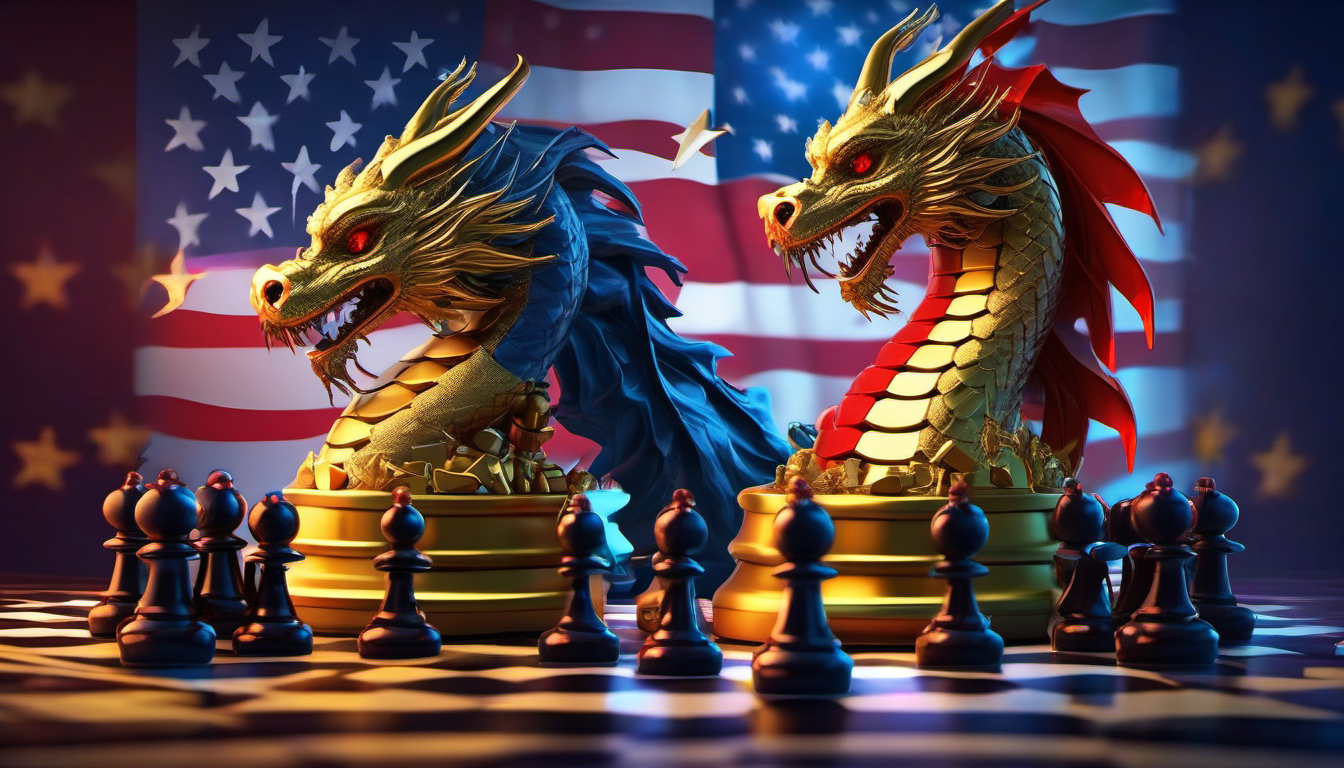
How Washington is dismantling its own cyber defenses to keep Beijing at the table
Executive Summary
- The Trump administration has quietly shelved at least six major tech security measures targeting Chinese firms — including bans on China Telecom, TP-Link routers, and Chinese data center equipment — ahead of the April Trump-Xi summit in Beijing.
- Former deputy NSA Matt Pottinger warns the US is "letting Beijing acquire new areas of leverage" over critical infrastructure at the very moment it claims to be reducing Chinese supply chain dependency.
- The trade-off reveals a fundamental tension: the administration is simultaneously pursuing the largest bilateral trade detente since the October 2025 Busan accord while hollowing out the security architecture that was supposed to protect the AI infrastructure boom.
Chapter 1: The Quiet Retreat
On February 12, 2026, Reuters revealed what China hawks in Washington had feared for months: the Trump administration has systematically mothballed a series of critical cybersecurity and technology measures aimed at Beijing. The shelved actions include:
- China Telecom US operations ban — the state-owned telecom giant retains access to American networks despite longstanding espionage concerns
- TP-Link router sales ban — the Chinese-linked company controls an estimated 65% of the US consumer router market, a massive surveillance surface
- Chinese data center equipment restrictions — sales of Chinese-manufactured hardware for US data centers remain unrestricted, even as the AI boom drives unprecedented data center construction
- China Unicom and China Mobile US internet businesses — both state-owned carriers continue operating in the American market
- Chinese electric truck and bus sales ban — connected vehicles with Chinese software remain available in the US market
Each of these measures had been advancing through the Commerce Department's Office of Information and Communications Technology and Services (OICTS), the agency charged with policing foreign tech threats. But after the October 2025 trade truce between Trump and Xi in Busan, leadership instructed staffers to "focus on Iran and Russia" — a remarkable redirection given that Iran is not considered a tech threat remotely comparable to China.
The timing is significant. The Commerce Department recently ousted the woman leading OICTS, replacing her with Katelyn Christ, a political appointee. Sources suggest Christ could revive the measures if relations sour after the April summit — but critics argue the damage window is open now.
Chapter 2: The Anatomy of a Bargain
To understand why Washington is trading security for diplomacy, one must trace the arc of US-China relations since the October 2025 crisis.
The October Escalation: In early October 2025, Beijing imposed sweeping export controls on rare earths and critical minerals, disrupting global supply chains. Trump threatened 100% tariffs on Chinese imports and tighter software export controls. Treasury Secretary Scott Bessent accused China of seeking to "pull everybody else down with them."
The Busan Reset: By late October, both sides pulled back. Trump and Xi met in Busan, South Korea, on October 30, producing a framework that included:
- China purchasing 12 million metric tons of US soybeans (fulfilled by January 2026)
- Rare earth magnet supply normalized to ~90% fulfillment
- A pledge to delay further export controls on both sides
- Conditional approval for limited H200 chip sales to China
The April Summit Preparation: With Trump planning to visit Beijing in April — and Xi invited to the US later in the year — both sides are building diplomatic goodwill. China has signaled willingness to increase soybean purchases to 25 million tons. Beijing's embassy welcomed cooperation that could make 2026 "a year where our two major countries advance toward mutual respect, peaceful coexistence, and win-win cooperation."
The security measures are, in effect, bargaining chips sacrificed for atmospherics.
Chapter 3: The Security Gap
The implications of the shelved measures are not abstract. They intersect directly with the most explosive growth sector in the US economy: AI infrastructure.
The Data Center Vulnerability: American hyperscalers — Amazon, Microsoft, Google, Meta — are in the midst of a combined $500+ billion data center buildout. These facilities are the physical backbone of the AI revolution. Allowing Chinese-manufactured equipment into this infrastructure creates potential:
- Supply chain dependencies — reliance on Chinese components that could be weaponized through export controls
- Hardware-level backdoors — the same concerns that drove the 2019 Huawei 5G ban, now replicating in data center hardware
- Intelligence collection surfaces — network equipment operated by state-owned telecoms provides persistent access to communications metadata
The TP-Link Problem: With an estimated 65% share of the US consumer router market, TP-Link devices sit at the gateway of millions of American homes and small businesses. The company spun off its California-based operations from its Chinese parent in 2024, but security researchers have identified firmware vulnerabilities that could be exploited for large-scale surveillance or botnet operations. The paused ban leaves this attack surface intact.
The Telecom Trojan Horse: China Telecom, China Unicom, and China Mobile are state-owned enterprises with direct ties to China's intelligence apparatus. Their continued US operations — however limited in scale — maintain a physical presence in American telecommunications infrastructure. The FCC revoked China Telecom Americas' authorization to operate in 2022, but enforcement gaps have allowed residual services to persist.
Matt Pottinger, who served as deputy national security advisor during Trump's first term, delivered the sharpest critique: "At a moment when we are desperately trying to remove ourselves from Beijing's leverage over rare-earth supply chains, it is ironic that we're actually letting Beijing acquire new areas of leverage over the US economy in telecoms infrastructure, in data centers and AI, and EVs."
Chapter 4: Historical Parallels — When Commerce Trumped Security
The pattern of sacrificing security measures for trade diplomacy is not new, but the scale and stakes are unprecedented.
The Huawei Reprieve (2019-2020): During the Phase One trade deal negotiations, Trump repeatedly granted temporary licenses allowing US companies to sell to Huawei despite the entity listing. Each reprieve was timed to trade negotiation milestones. The result: Huawei gained critical time to develop alternatives, and by 2023 had produced the Kirin 9000S chip — proving that commercial considerations consistently undermined the strategic goal of containing China's tech capabilities.
The ZTE Rescue (2018): After the Commerce Department effectively sentenced ZTE to corporate death for sanctions violations, Trump personally intervened to lift the penalty as a "personal favor" to Xi Jinping during trade talks. ZTE resumed operations with a fine and compliance monitors. The message to Beijing was clear: security measures are negotiable.
The Jackson-Vanik Precedent (1974-2012): For decades, the US conditioned trade relations with the Soviet Union and later Russia on human rights compliance through the Jackson-Vanik Amendment. The system worked imperfectly but established the principle that trade and security are inseparable. The current approach inverts this logic entirely — security protections are removed to facilitate trade.
The Critical Difference: In previous episodes, the items being traded were primarily export controls on goods flowing TO China. The current shelving involves defensive measures — restrictions on Chinese equipment and services operating WITHIN the United States. This is the equivalent of removing locks from your own doors to make a houseguest more comfortable.
Chapter 5: Scenario Analysis
Scenario A: Diplomatic Success, Strategic Erosion (45%)
Premise: The April summit produces a comprehensive framework agreement. China further opens markets, increases agricultural purchases, and moderates its rare earth restrictions. Tech security measures remain permanently shelved.
Probability Rationale: This is the path of least resistance. The October 2025 Busan framework is holding. Both leaders need domestic wins — Trump ahead of midterm elections, Xi amid economic slowdown. The soybean purchases (90% fulfilled) and rare earth normalization suggest good faith. Historical precedent: the Phase One deal held for 18 months before unraveling.
Trigger Conditions: Successful April summit; no major Taiwan escalation; China fulfilling agricultural commitments through midterms.
Risk: Each month the security measures remain shelved, Chinese equipment becomes more deeply embedded in US infrastructure. Reversing course becomes progressively harder — a ratchet effect. By the time a future crisis forces action, the dependency may be structural.
Scenario B: Crisis Reversal (30%)
Premise: A geopolitical shock — Taiwan escalation, cyber incident, or intelligence revelation involving Chinese telecom equipment — forces the administration to reinstate the shelved measures, possibly on an emergency basis.
Probability Rationale: The Volt Typhoon and Salt Typhoon cyber campaigns (2023-2025) demonstrated China's willingness to pre-position in US critical infrastructure. The window of reduced vigilance created by shelving security measures increases the probability of a significant intrusion going undetected. Historical frequency: major US-China cyber incidents have occurred roughly every 18-24 months since 2013.
Trigger Conditions: Discovery of a new Chinese APT campaign exploiting shelved-measure gaps; Taiwan military incident; major data breach traced to Chinese telecom equipment.
Timeline: 3-12 months. The April summit itself is a potential flashpoint if Taiwan negotiations fail.
Scenario C: Permanent Bifurcation Delayed (25%)
Premise: The shelved measures are neither fully reinstated nor permanently abandoned. They exist in bureaucratic limbo, revived selectively as leverage during ongoing negotiations. The result is a gray zone where neither side has clarity on the rules.
Probability Rationale: This reflects the actual pattern of US-China tech policy since 2018 — announcements followed by waivers, bans followed by licenses, deadlines followed by extensions. The OICTS office has been restructured with a new political appointee (Katelyn Christ) who could revive measures selectively. The bureaucratic machinery exists but lacks political mandate.
Trigger Conditions: Continued diplomatic normalization without major incidents; domestic political pressure from both hawks and doves; mid-level cyber incidents insufficient to trigger full reversal.
Timeline: Indefinite. This is the default trajectory absent a forcing event.
Chapter 6: Investment Implications
Immediate Beneficiaries:
- Chinese telecom equipment makers (ZTE, Huawei enterprise division) — continued US market access, however limited
- TP-Link — the paused ban removes an existential threat to their dominant US market position
- Chinese EV/truck manufacturers (BYD, Geely commercial) — the shelved connected vehicle ban preserves a future entry point
At-Risk Sectors:
- US cybersecurity firms (CrowdStrike, Palo Alto Networks, Fortinet) — reduced urgency for "rip and replace" programs targeting Chinese equipment dampens a potential demand catalyst
- Alternative router/networking companies (Netgear, Arris) — a TP-Link ban would have been a massive market share windfall
- US data center operators — increased regulatory uncertainty around equipment sourcing; potential future forced replacements if measures are reinstated
Structural Plays:
- Defense/intelligence contractors (Palantir, Booz Allen, Leidos) — regardless of policy outcome, the intelligence community will increase monitoring of Chinese infrastructure presence
- Domestic semiconductor/networking (Broadcom, Qualcomm) — long-term beneficiaries of eventual reshoring, but timeline uncertain
| Asset Class | Shelved Measures Hold | Crisis Reversal | Gray Zone |
|---|---|---|---|
| Chinese tech ADRs | +5-10% | -15-25% | Flat |
| US cybersecurity | Flat to -5% | +15-20% | +5% |
| TP-Link (private) | Stabilized | Existential risk | Uncertainty |
| Data center REITs | Neutral | -5-10% (supply disruption) | Neutral |
| Gold / safe havens | Neutral | +3-5% | Neutral |
Conclusion
The Trojan Horse Truce reveals the central contradiction of Trump-era China policy: the administration wants to "de-risk" from Chinese supply chains while simultaneously removing the security guardrails that would accomplish that goal. Scott Bessent's own words — "we do not want to decouple from China, but we do need to de-risk" — ring hollow when six major de-risking measures have been shelved for diplomatic convenience.
The deeper lesson is structural. In every US-China negotiation since 2018, security measures have proven to be the most expendable currency. Export controls get waived. Entity listings get licensed. Bans get paused. The pattern suggests that American tech security policy is not a strategic architecture but a bargaining chip factory — measures designed not to protect but to be traded away.
For investors, the signal is clear: bet on the trajectory of diplomatic normalization in the short term, but hedge against the inevitable crisis that will expose the security gaps created by this pause. The Huawei precedent shows that every reprieve eventually ends — but not before the adversary has exploited the window.
The question is not whether the shelved measures will be reinstated. It is whether they will be reinstated before or after the damage is done.
Leave a Reply