
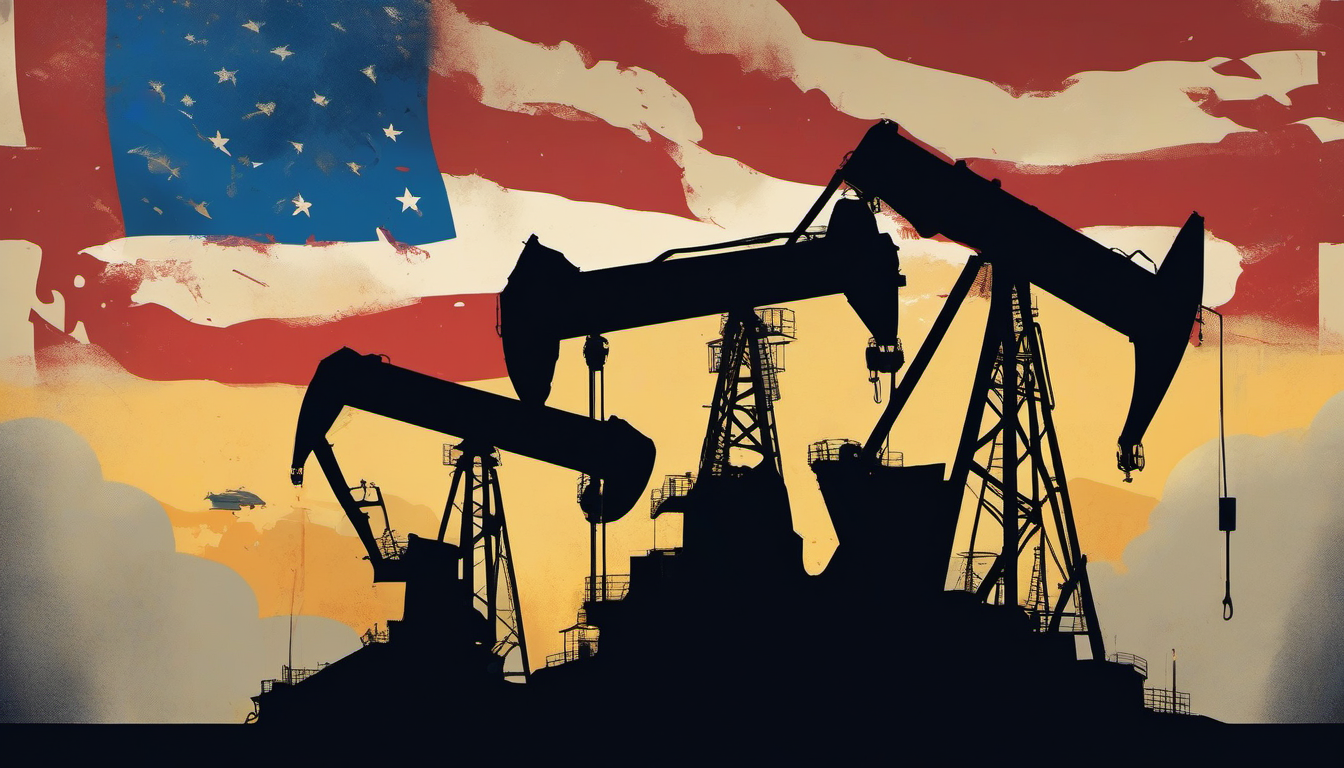
How a 90% valuation gap between American and European oil giants is rewriting the future of fossil fuel capitalism
Executive Summary
- BP has halted all share buybacks — making it the only top-5 oil major without a repurchase program — as $22.2 billion in net debt forces a painful balance-sheet reckoning under incoming CEO Meg O'Neill.
- A 90% valuation gap has opened between US majors (Exxon, Chevron) and European peers (BP, Shell, TotalEnergies) since the start of 2026, the widest in modern history, reflecting fundamentally diverging corporate strategies.
- The oil supermajor business model is fracturing along geographic lines: American majors are doubling down on production growth and shareholder returns, while European majors — caught between failed green pivots and insufficient fossil fuel scale — face existential questions about independence.
Chapter 1: The Buyback That Wasn't
On February 10, 2026, BP Plc did something no top-five oil major has done since the depths of the pandemic: it suspended share buybacks entirely. The $750 million quarterly program — already slashed from $1.75 billion a year earlier — was eliminated, and the company withdrew its guidance of returning 30–40% of operating cash flow to shareholders.
The numbers tell a grim story. BP's net debt ended 2025 at approximately $22.2 billion, excluding hybrid bonds and lease obligations. Despite announcing $4–5 billion in cost cuts through 2027, including the potential sale of its iconic Castrol lubricants division, the company's indebtedness barely fell over the year. Fourth-quarter net income of $1.54 billion was in line with diminished expectations, capping a year in which activist investor Elliott Investment Management stormed the gates, CEO Murray Auchincloss was ousted after less than two years, and Chairman Albert Manifold recruited Woodside Energy's Meg O'Neill as a replacement.
BP shares fell 5.7% in early London trading. As RBC analyst Biraj Borkhataria noted, investors were "a little surprised to see the net debt target unchanged given the implied savings from the buyback."
The contrast with rivals is stark. On the same day, Shell maintained its $3.5 billion quarterly buyback despite reporting its weakest earnings in five years. Across the Atlantic, Exxon and Chevron signaled continued shareholder returns at current levels even as Brent crude lingered near $69 per barrel.
BP is now, in the words of Bloomberg, "the only one of the top five oil majors without a share repurchase program." For a company that was once Britain's most valuable, the symbolism is devastating.
Chapter 2: The Atlantic Divide
The most striking feature of the 2026 oil earnings season is not the decline in profits — that was expected as Brent averaged below $70 — but the radical divergence between American and European strategies.
The American Playbook: Outproduce the Price Decline
Exxon Mobil reported Q4 2025 earnings of $7.6 billion, beating expectations, by doing what it does best: pumping more oil. The company's Permian Basin and Guyana operations delivered record output, effectively "outproducing the price decline," as one analyst put it. Chevron followed a similar approach, reporting $3.0 billion in earnings and maintaining its buyback commitment.
The US strategy is built on three pillars:
- Low-cost upstream assets (Permian, Guyana, deepwater Gulf of Mexico)
- Scale economics that compress costs as volumes rise
- Political tailwinds from Trump's "America First" energy policy, including expanded Venezuela licenses and relaxed environmental regulations
The European Retreat: Neither Green Nor Lean
European majors, by contrast, are trapped in a strategic no-man's-land. Over the past five years, they attempted a "green pivot" — investing billions in renewables, hydrogen, and carbon capture. BP alone committed $3–5 billion annually to low-carbon ventures under former CEO Bernard Looney's 2020 strategy.
That pivot has now been reversed. Under pressure from Elliott, Auchincloss announced in February 2025 a return to BP's "core oil and gas business." Shell CEO Wael Sawan similarly refocused on hydrocarbons. TotalEnergies, while maintaining some renewable ambitions, reduced buybacks "to face economic and geopolitical uncertainties."
But the retreat from green has not made European majors competitive with American peers. The valuation gap tells the story:
| Metric | Exxon Mobil | Chevron | Shell | BP | TotalEnergies |
|---|---|---|---|---|---|
| Q4 2025 Net Income ($B) | 7.6 | 3.0 | 2.8 | 1.54 | ~2.5* |
| Quarterly Buyback ($B) | ~4.0 | ~3.5 | 3.5 | 0 | Reduced |
| Net Debt ($B) | ~12 | ~20 | ~35 | 22.2 | ~18 |
| 2026 YTD Share Performance | +6% | +4% | -3% | -12% | -1% |
| EV/EBITDA Multiple | ~6.5x | ~6.0x | ~3.5x | ~4.0x | ~3.8x |
*TotalEnergies Q4 reports Feb 12. Estimates shown.
The valuation gap — US majors trading at over 90% premium to European peers, according to Reuters Breakingviews — is the widest in modern history. It reflects not just earnings quality but a fundamental market judgment: American oil companies have a future; European ones have a question mark.
Chapter 3: The Activist Siege and the Fossil Fuel Identity Crisis
BP's travails are not unique. They represent the sharpest edge of a crisis afflicting the entire European energy establishment.
The Elliott Invasion
When Elliott Investment Management disclosed its BP stake in early 2025, it arrived with a clear thesis: BP's green investments had destroyed shareholder value, and the company needed to return to its petroleum roots. Elliott pushed for asset sales, cost cuts, and management change. By December, it got all three — Auchincloss was replaced by O'Neill, a committed fossil fuel champion who built Woodside into Australia's largest energy company through aggressive LNG and offshore oil development.
But Elliott's playbook raises an uncomfortable question: if the green pivot was wrong, and the fossil fuel pivot isn't generating competitive returns either, what exactly is BP's strategic identity?
The Stranded Middle
The problem is structural. European oil majors lack the low-cost upstream assets that make Exxon and Chevron resilient to low prices. BP's production portfolio — spread across the North Sea, Azerbaijan, the Middle East, and increasingly Brazil — is higher-cost and more geopolitically exposed. Its 8-billion-barrel Bumerangue discovery in Brazil is promising but years from production.
Meanwhile, the companies' London listing depresses valuations relative to NYSE-listed peers. Shell has considered a New York listing; BP has reportedly explored the same. The market's message is clear: in an era of "America First," being an American oil company is itself a competitive advantage.
The AGM Battleground
Adding complexity, a new wave of activist investors plans to target Big Oil at 2026 annual general meetings — but from the opposite direction. Climate-focused shareholders are pushing for emissions reduction commitments, just as companies have pivoted back toward fossil fuels. European majors face simultaneous pressure from financial activists demanding more oil and climate activists demanding less.
Chapter 4: Scenario Analysis
Scenario A: BP Acquisition (35%)
Thesis: BP's depressed valuation makes it a takeover target. At current prices, BP trades at roughly 4x EV/EBITDA — a discount that would be irresistible to a larger acquirer.
Historical Precedent: The oil industry has a long history of supermajor consolidation during downturns. In 1998-2000, when oil averaged $12-25/barrel, BP itself acquired Amoco ($48B) and ARCO ($27B). Exxon merged with Mobil ($81B). Chevron absorbed Texaco. Total merged with Fina and Elf. Every major oil downturn since the 1980s has triggered supermajor M&A.
Trigger Conditions:
- BP share price falls below £3.00 (currently ~£3.40)
- O'Neill fails to articulate a compelling standalone strategy by mid-2026
- A major acquirer (Shell, Exxon, or a sovereign wealth fund) sees BP's Brazilian assets and Middle East positions as strategically undervalued
Why 35%: The 1998-2000 precedent is strong, and BP's current valuation is approaching levels that historically trigger deals. However, regulatory hurdles (UK national interest, antitrust) and BP's $22.2B debt load are deterrents. Shell's own £35B net debt makes a Shell-BP merger financially challenging.
Scenario B: Managed Decline Under O'Neill (45%)
Thesis: O'Neill stabilizes BP through disciplined cost-cutting, asset sales, and debt reduction, but the company remains a smaller, lower-growth entity.
Historical Precedent: ConocoPhillips' 2012-2016 transformation under Ryan Lance provides the closest analog. The company sold $16 billion in assets, cut capex by 50%, and emerged smaller but financially healthier. Its share price took four years to recover.
Trigger Conditions:
- Castrol sale closes at $10-15B, significantly reducing net debt
- Brent remains above $60, providing sufficient cash flow for gradual deleveraging
- O'Neill successfully resets investor expectations toward "value over growth"
Why 45%: This is the most likely path because it requires only incremental execution rather than transformative events. O'Neill's track record at Woodside suggests competence in managing a portfolio oil company. But this scenario means BP permanently cedes its place among the "supermajors" and becomes a mid-major.
Scenario C: Breakup or Radical Restructuring (20%)
Thesis: BP's diverse portfolio is worth more in pieces than as a whole, leading to a voluntary or forced breakup.
Historical Precedent: Marathon Oil's 2011 spinoff of Marathon Petroleum, which created two focused companies that outperformed the combined entity. More recently, Johnson & Johnson's 2023 separation into pharmaceutical and consumer health businesses.
Trigger Conditions:
- Elliott or another activist pushes for a separation of upstream (exploration/production) from downstream (refining/trading)
- The Castrol sale demonstrates that standalone divisions command higher valuations
- A new CEO from outside the industry brings a conglomerate-discount mindset
Why 20%: Oil industry breakups are rare because of integrated value chains and tax efficiencies. However, the conglomerate discount on BP is now so severe that financial logic increasingly favors separation.
Chapter 5: Investment Implications
The Transatlantic Oil Trade
The 90% valuation gap between US and European majors creates a clear relative-value opportunity — but the direction depends on your view of oil prices:
If Brent stays $60-70: The gap likely persists or widens. US majors' low-cost production allows continued buybacks; European majors continue to struggle. BP is the most vulnerable.
If Brent rises to $80+: European majors narrow the gap through operating leverage. BP's upside is greatest given its current depression. The 1998 playbook — buy European, sell American — applies.
If Brent falls below $55: Existential risk for BP. Acquisition becomes highly likely. Shell and Total face dividend risk.
Sector Signals
| Asset Class | Signal | Rationale |
|---|---|---|
| US Oil Majors (XOM, CVX) | Neutral/Hold | Fully valued; buybacks support floor |
| European Oil Majors (BP, SHEL) | Contrarian Long | 4x EV/EBITDA prices in permanent decline |
| Oil Services (SLB, HAL) | Negative | Capex cuts from European majors reduce demand |
| UK Equities (FTSE 100) | Drag | BP/Shell = ~15% of FTSE; weakness hurts index |
| Sterling | Marginal Negative | BP's £-denominated dividends attract foreign buyers; uncertainty weighs |
Historical Performance in Prior Supermajor Crises
During the 1998-2000 oil crisis, European majors that survived (BP, Total) delivered 200-300% returns over the subsequent 5 years as oil recovered and acquisition synergies materialized. The companies that were acquired (Amoco, Elf, Texaco) saw shareholders receive 30-50% premiums.
Conclusion
BP's buyback suspension is not merely a financial event — it is a strategic capitulation that marks the end of an era. For 25 years since the Amoco merger, BP positioned itself as a transatlantic supermajor capable of competing with Exxon and Shell on equal terms. That claim is no longer credible.
The question now is what BP becomes. Under Meg O'Neill, it may find a path as a leaner, more focused upstream operator — a larger Woodside, essentially, with premier assets in Brazil and the Middle East. Or it may become a target, absorbed by a rival in the next great wave of oil industry consolidation.
What BP almost certainly will not become is what it was: a company that could credibly claim to be among the world's five most important energy companies. That club now has four members, and the membership committee is American.
Disclaimer: This analysis is for informational purposes only and does not constitute investment advice.
Leave a Reply