
Executive Summary
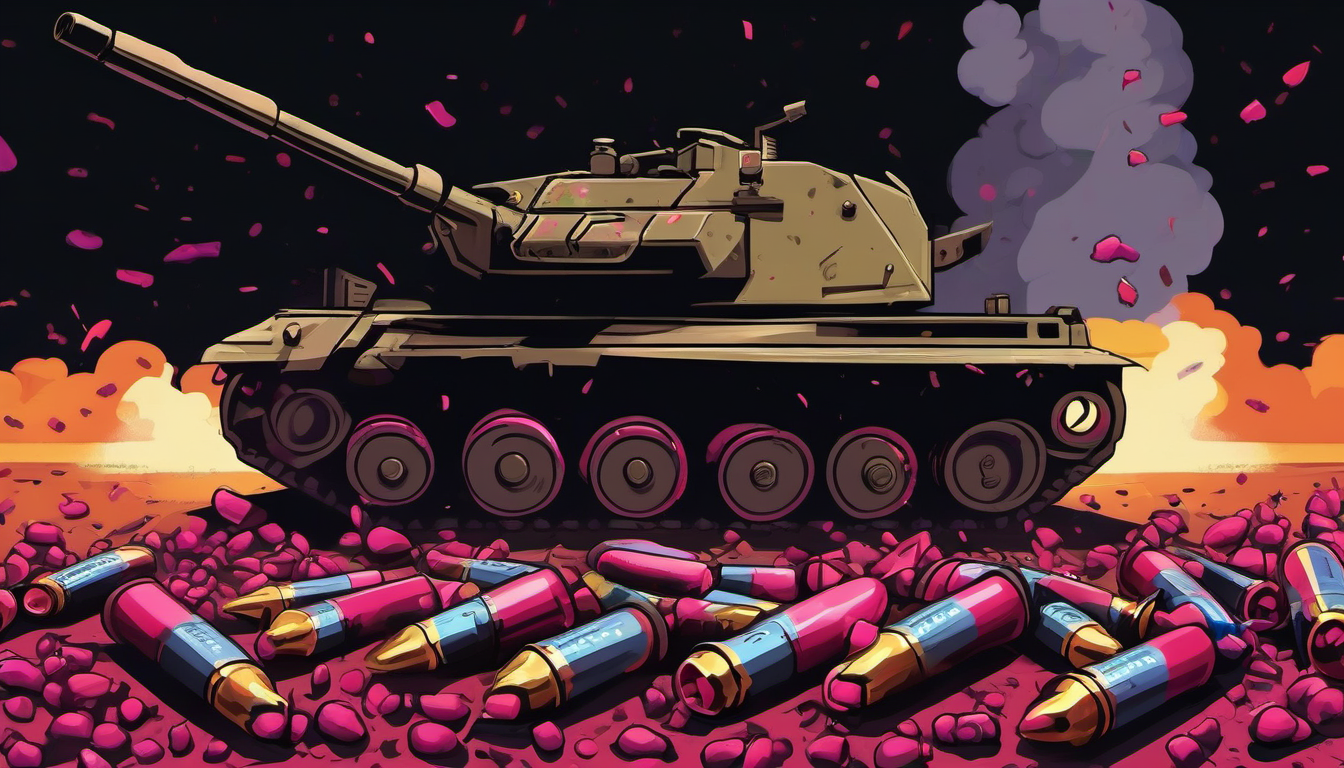
A joint investigation by ICIJ and The New York Times reveals that ammunition manufactured at the Lake City Army Ammunition Plant—the largest U.S. military small-arms ammunition factory—has been systematically smuggled to Mexican drug cartels. Since 2012, over 40,000 rounds of .50-caliber ammunition have been seized at the border, with Lake City products accounting for one-third of them. This military-grade ammunition has enabled cartels to overwhelm Mexican police, down helicopters, and pierce armored vehicles—all while the U.S. Army defends commercial sales as saving taxpayers $50 million annually. The investigation exposes a profound irony: the same administration that designated Mexican cartels as "foreign terrorist organizations" operates a factory indirectly supplying them with the firepower to wage war.
Chapter 1: The Villa Unión Massacre — When the Ground Trembled
On the morning of November 30, 2019, a convoy of pickup trucks carrying men armed with heavy machine guns and .50-caliber rifles entered the quiet Mexican town of Villa Unión, Coahuila.
Their mission was intimidation: to set fire to the town hall and establish dominance. What followed was a scene of urban warfare that left four police officers, two civilians, and 19 cartel members dead.
"The ground trembled," recalled Luis Manzano, a 27-year-old local journalist who drove into town during the shooting. Spent casings covered the streets "like fallen leaves." The thunder of .50-caliber guns was unlike anything he had experienced.
When investigators collected evidence from the carnage, they gathered at least 45 .50-caliber casings. Stamped on each one were two letters: L.C.
Those letters stand for Lake City Army Ammunition Plant—a sprawling facility just outside Kansas City, Missouri, owned by the U.S. government and operated under Army contract. It is the largest manufacturer of rifle rounds used by the American military.
It has also become a major supplier of ammunition to Mexican drug cartels.
Chapter 2: Lake City — America's Ammunition Arsenal
The Factory That Won World Wars
Lake City Army Ammunition Plant was established in 1940 as one of 12 small-caliber ammunition plants constructed to support World War II. It has operated continuously ever since, with the exception of a five-year gap between WWII and the Korean War.
| Metric | Value |
|---|---|
| Established | 1940 |
| Location | Independence, Missouri |
| Owner | U.S. Army |
| Current Operator | Olin Winchester (since 2019) |
| Annual Capacity | 1.6+ billion rounds |
| .50-Caliber Capacity | 60 million rounds/year |
| Commercial Market Share | ~30% of U.S. civilian .223/5.56 |
The plant's primary mission is supplying the U.S. military with training and combat ammunition. But a lesser-known aspect of its operations has had devastating consequences abroad.
The Commercial Loophole
During the Global War on Terror, Army planners became concerned about potential ammunition shortfalls. To ensure surge capacity, they struck a deal with ATK (later Northrop Grumman): the contractor could ramp up commercial sales in exchange for maintaining the ability to produce 1.6 billion rounds annually.
By 2008, Lake City ammunition began flowing into retail markets. By 2013, 10-round boxes of .50-caliber cartridges were available at Walmart.
The U.S. Army's defense: Commercial sales save taxpayers approximately $50 million annually by reducing the government's ammunition costs.
The unintended consequence: Those same rounds began appearing at crime scenes across Mexico.
Chapter 3: The .50-Caliber Revolution in Cartel Warfare
A Weapon That "Tips the Scale"
The .50 BMG (Browning Machine Gun) cartridge was developed in the early 20th century to attack tanks and aircraft. Each round is as big as a medium-sized cigar and designed to destroy vehicles from over a mile away.
For decades, these rounds were confined to military battlefields. That changed in 1982 with the invention of the first civilian .50-caliber rifle—nearly five feet long, weighing 30 pounds, but capable of sniper-like accuracy at extreme distances.
| Characteristic | .50 BMG Round |
|---|---|
| Bullet Diameter | 12.7mm (0.50 inches) |
| Effective Range | 1,800+ meters |
| Muzzle Energy | ~18,000 joules |
| Civilian Price | $3-4 per round |
| Armor Penetration | Standard: Light vehicles; API: Armored vehicles |
"The impact that one .50-cal has in a firefight is outrageous," said Chris Demlein, a former ATF agent who spent years investigating gun smuggling to Mexico. "They really, really tip the scale."
Cartels Outgunning the State
Mexican cartels—particularly the Jalisco New Generation Cartel (CJNG) and Sinaloa Cartel—have transformed .50-caliber weapons into instruments of strategic dominance:
May 2011: Cartel members forced down a Mexican Federal Police helicopter in Michoacán. Days later, gunmen fired on four more helicopters with .50-caliber weapons.
October 2019: Thirteen police officers were ambushed and killed in Michoacán. Investigators found Lake City .50-caliber casings at the scene. One officer burned to death. The rest were outgunned by cartel forces.
Early 2024: Gunmen used .50-caliber armor-piercing incendiary (API) rounds—a more destructive variant—to attack a police convoy. One bullet pierced an armored vehicle, killing a crew member and wounding three others.
"The armor that we have cannot protect our personnel from this kind of penetration," admitted then-Defense Secretary Luis Cresencio Sandoval.
Chapter 4: Following the Ammunition Trail
The Numbers
According to data obtained through public records requests:
| Period | Agency | .50-Cal Rounds Seized | Lake City Share |
|---|---|---|---|
| 2012-2024 | ATF (Border States) | 40,370+ | ~33% |
| 2019-2024 | ATF (Border States) | 36,000+ | ~33% |
| 2019-2024 | CBP | 21,400 | Includes 2,850 API |
Lake City's share—about one-third—is larger than any other single manufacturer. The remainder comes primarily from Brazil and South Korea.
The Smuggling Pipeline
The typical smuggling operation works as follows:
- Bulk Purchase: A civilian buyer purchases large quantities of ammunition from online retailers or gun shows
- Consolidation: Rounds are gathered at safe houses, often in border states
- Cross-Border Transfer: Ammunition is smuggled into Mexico (no license = federal crime)
- Distribution: Cartels distribute to regional cells and enforcers
"Our mantra became: follow the ammo and you'll get to the guns," said Jason Red, a former Department of Homeland Security investigator in Arizona.
Retailers Who Stopped Selling
Some ammunition dealers recognized the problem and stopped sales:
Vasily Campbell, owner of an online ammunition business, said he became suspicious when buyers began requesting 100-round ammo cans delivered to residential addresses. "That's not a normal purchase," he said. "There's several orders I straight-up canceled."
He stopped selling the ammunition "about two years ago once we found out where it was going and how it was getting there."
Chapter 5: The Iron Irony — Terrorists with American Ammunition
Designated Terrorists, Armed by America
In February 2025, the Trump administration designated six Mexican cartels as foreign terrorist organizations—including CJNG and the Sinaloa Cartel.
The designation was accompanied by military-style operations:
- Operation Southern Spear: Airstrikes on cartel vessels in the Caribbean
- Maduro Capture: The Venezuelan president was seized in a military operation
- 128 Cartel Members Killed: In maritime interdiction operations since September 2025
Yet the very organizations being targeted with military force continue to acquire ammunition manufactured at a U.S. Army facility.
Congressional Action — And Its Limits
In 2000, Congress passed legislation prohibiting the Pentagon from selling armor-piercing .50-caliber ammunition to civilians. The law required anyone receiving such ammunition to pledge not to transfer it to non-governmental buyers.
What the law did not address: Standard "ball" (non-armor-piercing) rounds—which still have devastating effects against light vehicles, buildings, and unarmored personnel.
The loophole: Commercial operators continued selling ball ammunition. And armor-piercing rounds continued appearing:
- In 2024, SGAmmo negotiated purchase of API rounds from outgoing contractor Northrop Grumman
- The distributor urged customers to "get some before this stuff gets banned"
- At least 16 online retailers have sold armor-piercing ammunition from Lake City
Chapter 6: Scenario Analysis — What Comes Next?
Scenario A: Regulatory Crackdown (25%)
Trigger Conditions:
- High-profile attack on U.S. personnel with Lake City ammunition
- Congressional investigation gaining bipartisan support
- Public pressure from ICIJ/NYT investigation
Potential Actions:
- Ban all commercial .50-caliber sales from Lake City
- Enhanced tracking requirements for bulk ammunition purchases
- Export controls on civilian .50-caliber ammunition
Outcome: Cartels face temporary supply disruption but shift to alternative sources (Brazil, South Korea, black market)
Scenario B: Incremental Measures (55%)
Trigger Conditions:
- Current trajectory continues
- Limited political will for comprehensive reform
- Gun lobby opposition to additional restrictions
Potential Actions:
- Enhanced ATF monitoring of bulk ammunition sales
- Voluntary retailer restrictions
- Increased border interdiction
Outcome: Marginal reduction in Lake City ammunition reaching cartels, but fundamental problem persists
Scenario C: Status Quo Maintained (20%)
Trigger Conditions:
- Investigation fails to generate sustained attention
- Cost-saving argument prevails in budget discussions
- Second Amendment politics block any restrictions
Outcome: Cartels continue receiving Lake City ammunition; escalating violence in Mexico
Chapter 7: Investment and Policy Implications
Defense Sector
| Company | Exposure | Impact |
|---|---|---|
| Olin Corp (NYSE: OLN) | Lake City operator since 2019 | Reputational risk; contract review possible |
| Vista Outdoor | Major commercial ammunition | Potential market share gain if Lake City commercial sales restricted |
| Northrop Grumman | Previous operator (sold 2019) | Historical liability exposure |
Border Security
If commercial Lake City sales are restricted:
- Civilian ammunition prices may rise 10-15%
- Ammunition shortages during military surge scenarios
- Increased smuggling of foreign-manufactured rounds
Mexico Policy
The investigation complicates U.S.-Mexico relations:
- Mexico's lawsuit against U.S. gun manufacturers (ongoing)
- Cartel designation as terrorists vs. ammunition supply
- Credibility of "stopping the flow of guns" initiatives
Conclusion: The $50 Million Question
The U.S. Army defends commercial ammunition sales as saving taxpayers $50 million annually.
But what is the cost of that savings?
- 13 police officers killed in a single ambush in Michoacán
- Helicopters downed by cartel fire
- Armored vehicles that cannot protect their crews
- A drug war that has claimed over 400,000 lives since 2006
Brenda Aparicio Villegas, whose husband was among the 13 officers killed in the October 2019 ambush, offered a simple verdict:
"Not enough has been done to stop the flow of guns and ammunition to Mexico. Sadly, many of us pay the price."
The spent casings stamped "L.C." that investigators collected from her husband's death scene tell the story of an American policy that prioritizes cost savings over consequences—and of a factory that supplies both sides of a war it claims no part in.
Sources: ICIJ, The New York Times, ATF records, CBP data, Mexican Defense Ministry briefings
Leave a Reply