
February 7, 2026
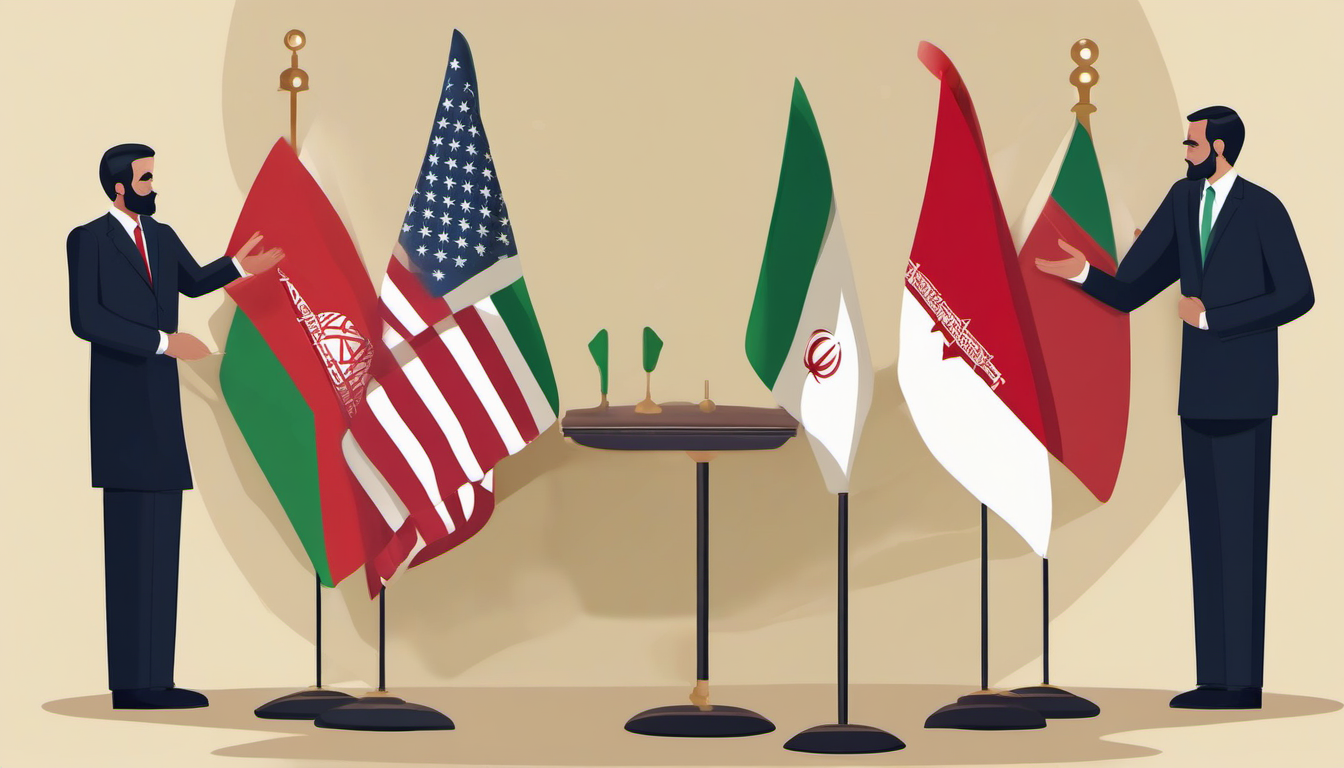
For the first time since American and Israeli forces devastated Iran's nuclear infrastructure last June, diplomats from Washington and Tehran sat down—indirectly—to discuss the future of Iran's atomic program. The venue was Muscat, Oman. The mood was cautious. And hovering over every word was the threat of more violence.
After eight hours of shuttle diplomacy, both sides emerged calling it a "good start." Iran's Foreign Minister Abbas Araghchi spoke of overcoming "deep mistrust." President Donald Trump, aboard Air Force One, warned that if Iran doesn't make a deal, "the consequences are very steep."
This is diplomacy in the Trump era: carrots in one hand, cruise missiles in the other.
1. The Talks: What Happened in Muscat
The Format
The February 6 talks were indirect—a deliberate choice by both sides to avoid the political risks of face-to-face meetings. Oman's Foreign Minister Badr al-Busaidi shuttled between the two delegations, carrying messages and proposals across the diplomatic no-man's-land.
The American Team:
- Steve Witkoff, Trump's special envoy
- Jared Kushner, senior advisor and son-in-law
- Admiral Brad Cooper, CENTCOM commander
The Iranian Team:
- Abbas Araghchi, Foreign Minister
- Senior nuclear negotiators
The presence of Admiral Cooper sent an unmistakable message: American military leverage is inseparable from American diplomacy. The USS Abraham Lincoln carrier strike group remains positioned in the Persian Gulf, a floating reminder of what happens if talks fail.
What Was Discussed
Iran drew a hard line from the start: nuclear issues only. No discussion of human rights, ballistic missiles, or Tehran's support for regional proxies including Hamas, Hezbollah, and the Houthis.
"Our talks are solely nuclear and we do not discuss any other issues with the Americans," Araghchi stated flatly.
The US team arrived with a broader agenda—Secretary of State Marco Rubio had publicly demanded discussions cover missiles, proxies, and "treatment of their own people." But Iran reportedly refused to proceed unless Washington agreed to narrow the scope.
According to The Wall Street Journal, neither side moved significantly from their opening positions. Iran refused to end uranium enrichment. The US refused to lift sanctions without comprehensive concessions.
Yet both sides agreed to continue talking.
2. The Shadow of June: Why These Talks Are Different
The Attacks That Changed Everything
These negotiations cannot be understood without acknowledging what happened eight months ago. In June 2025, the United States and Israel launched coordinated strikes against Iran's nuclear facilities and political leadership—just days before a scheduled sixth round of nuclear talks.
The damage was extensive:
- Major nuclear sites struck
- Key facilities at Natanz and Fordow damaged
- Political leadership targeted
- Iran's air defenses overwhelmed
Iran's retaliation was limited but symbolic. The Islamic Republic found itself in its weakest position since the 1980s, facing both external military pressure and unprecedented internal unrest.
The Trust Deficit
"After eight turbulent months during which we went through a war, resuming a process of dialogue is not simple," Araghchi admitted. "The deep mistrust that has developed on top of previous mistrust is a serious challenge."
Iran entered these talks convinced that the US used previous negotiations as a smokescreen while preparing military action. Any new agreement will require ironclad guarantees that history won't repeat itself.
3. The Economic Pressure Campaign
Trump's New Executive Order
Hours before the Muscat talks concluded, Trump signed an executive order imposing secondary sanctions on countries importing Iranian goods and services. This "tariff weapon" threatens to punish any nation doing business with Tehran.
The logic is simple: strangle Iran's economy until its leaders accept American terms.
Fresh Sanctions
The US Treasury announced new Iran-related sanctions on the same day:
- 2 individuals designated
- 15 entities sanctioned
- 14 vessels blacklisted
The timing was deliberate—a reminder that diplomatic engagement doesn't mean economic relief.
Iran's Economic Crisis
The pressure is working, at least economically:
- The Iranian rial has lost half its value against the dollar since the June attacks
- Food inflation exceeds 100%
- Standard of living has plummeted
These economic conditions sparked the massive protests that erupted in late December, killing thousands of demonstrators in the government's bloody crackdown.
4. Iran's Red Lines
Non-Negotiable: Enrichment Rights
Iran insists its right to enrich uranium on Iranian soil is not negotiable. This right was codified in the 2015 JCPOA nuclear deal—the same agreement Trump abandoned in 2018 during his first term.
Tehran's position: enrichment is a sovereign right guaranteed by the Non-Proliferation Treaty. Any new agreement must acknowledge this.
What Iran Might Accept
Behind the public posturing, compromise space exists:
-
Suspension, Not Elimination: Iran might agree to suspend enrichment above certain levels for a fixed period—perhaps 5-10 years—without formally renouncing the right.
-
Regional Consortium: A multilateral enrichment facility could be established, with Iran as a participant rather than sole operator. This addresses proliferation concerns while preserving Iranian participation.
-
Enhanced Inspections: More intrusive IAEA monitoring in exchange for meaningful sanctions relief.
What Iran Won't Discuss
For now, these remain off the table:
- Ballistic missile program
- Support for regional armed groups
- Human rights situation
- Political prisoners
Iran views these as internal matters or legitimate security policies, not bargaining chips.
5. The American Dilemma
Maximum Pressure 2.0
Trump's Iran strategy resembles his first-term approach, but supercharged:
- Massive naval deployment in the Persian Gulf
- Economic sanctions tightened to unprecedented levels
- Demonstrated willingness to use military force (June 2025 strikes)
- Public messaging to Iranian protesters ("help is on the way")
The Problem with Leverage
The administration has enormous leverage—but using it carries enormous risks.
If talks fail:
- Iran could restart aggressive enrichment
- Regional allies (Israel, Gulf states) may demand military action
- Oil markets could spike dramatically
- Iran might lash out at US bases or regional targets
If the US strikes again:
- Iran has promised retaliation against US bases and Israel
- Gulf shipping lanes could be targeted
- Regional war becomes likely
- American casualties become possible
What Washington Wants
The ideal outcome for Washington:
- Iran permanently limits enrichment below weapons-grade levels
- Intrusive inspections with "anytime, anywhere" access
- Restrictions on ballistic missile development
- Reduced support for regional proxies
- Verifiable and enforceable commitments
Getting all of this is unlikely. The question is which priorities are essential and which are negotiable.
6. Regional Stakes
Israel's Position
Israel conducted the June 2025 strikes alongside the United States and remains deeply skeptical of any diplomatic solution. Prime Minister Netanyahu has repeatedly stated that Israel will act independently if it perceives an imminent Iranian nuclear threat.
Any agreement that allows Iran to retain enrichment capability will face fierce Israeli opposition.
Gulf States' Calculations
Saudi Arabia, the UAE, and other Gulf monarchies have complex interests:
- Fear of Iranian nuclear capability
- Desire for regional stability
- Economic interests in normalized relations
- Concerns about being caught in US-Iran crossfire
Notably, Iran insisted on removing Gulf states from the negotiating room—rejecting the US proposal to include Qatar, UAE, Egypt, and Saudi Arabia as observers.
Russia and China
Both powers maintain significant relationships with Iran:
- Russia relies on Iranian drones and military cooperation
- China depends on Iranian oil despite sanctions
- Both oppose US unilateral sanctions as a matter of principle
Neither wants to see Iran collapse, but neither wants it to acquire nuclear weapons either.
7. Scenario Analysis
Scenario A: Incremental Progress (40%)
Conditions: Both sides find face-saving compromises
Timeline: 3-6 months of negotiations
The most likely near-term outcome is a series of small confidence-building measures:
- Iran limits enrichment to 20% (from current 60%)
- US unfreezes limited Iranian assets
- Both sides agree to continued talks
This doesn't resolve the fundamental dispute but prevents escalation.
Triggers:
- Successful second round of talks next week
- Iran signals willingness on enrichment limits
- US provides economic confidence-building measures
Scenario B: Stalemate and Escalation (35%)
Conditions: Positions remain frozen
Timeline: 2-4 months before crisis
If neither side blinks:
- Talks break down by spring
- Trump faces pressure to act on threats
- Iran accelerates enrichment as counter-leverage
- Military confrontation becomes increasingly likely
Triggers:
- Iran enriches to 90% (weapons-grade)
- Major terrorist attack attributed to Iranian proxies
- Israeli unilateral action
Scenario C: Comprehensive Deal (15%)
Conditions: Major concessions by both sides
Timeline: 6-12 months
A full resolution would require:
- Iran accepts significant enrichment limitations
- US provides substantial sanctions relief
- International monitoring regime established
- Regional security arrangements addressed
Historical precedent (2015 JCPOA) shows this is achievable, but took years of negotiation under less hostile conditions.
Scenario D: Regime Change Dynamic (10%)
Conditions: Internal Iranian collapse
Timeline: Unpredictable
Trump's statements to Iranian protesters ("help is on the way") suggest some in Washington still hope for regime change. If protests intensify and the government loses control, all calculations change.
This would create both opportunities and dangers—a nuclear-armed state in chaos is every nonproliferation expert's nightmare.
8. Investment Implications
Oil Markets
Any progress in talks could push oil prices lower as the risk premium decreases. Conversely, breakdown would spike Brent crude toward $100+.
Key indicators to watch:
- Tone of statements after next week's meeting
- Iranian enrichment levels
- US naval movements
Regional Assets
- Gulf equities: Sensitive to escalation risk
- Defense contractors: Benefit from sustained tension
- Shipping: Strait of Hormuz risk premium
Currency Implications
- Iranian rial could recover significantly with sanctions relief
- Dollar strength tied to risk-off flows during tension
- Gulf currencies stable but watching closely
Conclusion: The Art of the Nuclear Deal
Donald Trump wrote a book called "The Art of the Deal." Now he faces perhaps the most consequential negotiation of his presidency—one where failure could mean war and success could reshape the Middle East.
The Muscat talks represent a narrow opening. Both sides showed up. Both sides talked. Both sides agreed to talk again. In a relationship defined by decades of hostility, two military confrontations, and zero trust, this counts as progress.
But the fundamental contradictions remain:
- Iran wants sanctions relief without abandoning enrichment
- The US wants comprehensive concessions without offering guarantees
- Israel wants military action, not diplomacy
- The region wants stability but fears the price
Next week's talks will reveal whether Muscat was a genuine breakthrough or just another chapter in an endless cycle of hope and disappointment.
For now, the aircraft carriers remain on station. The sanctions keep tightening. And in Tehran and Washington, leaders calculate the costs of war versus the costs of peace.
This analysis reflects information available as of February 7, 2026. The diplomatic situation remains fluid.
Leave a Reply