
🎙️ Listen to this article:
February 7, 2026
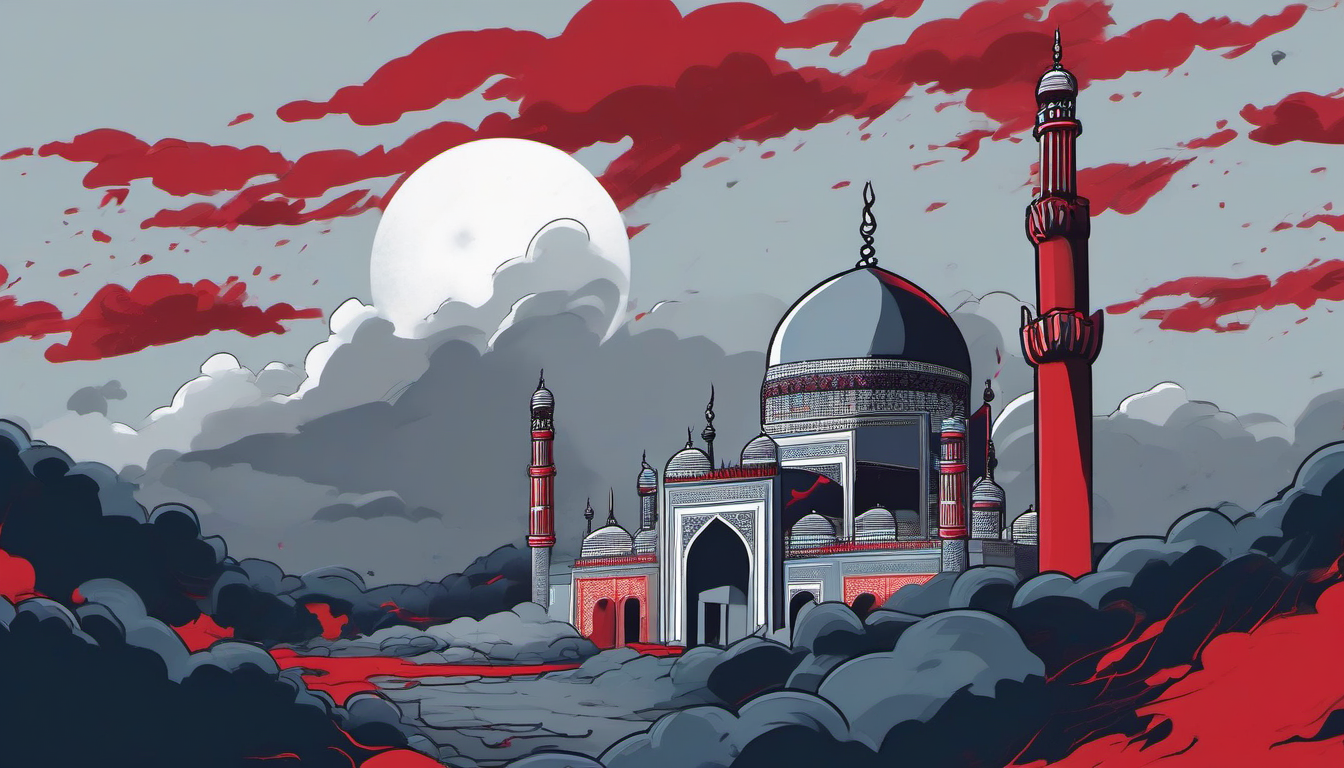
On a Friday afternoon meant for prayer, the Khadija Tul Kubra mosque in Islamabad's Tarlai Kalan neighborhood became a killing ground. A lone attacker opened fire on security guards before detonating a suicide vest inside the packed Shia house of worship. At least 32 worshippers died. Another 170 were hospitalized. The Islamic State–Khorasan Province (ISIS-K) claimed responsibility within hours.
This was not just another attack in a country numbed by decades of violence. This was the deadliest terrorist strike in Pakistan's capital since the 2008 Marriott Hotel truck bomb—and the second major attack in the city in just three months. It exposed a terrifying reality: Pakistan is now fighting three simultaneous insurgencies while its nuclear-armed neighbor India watches with growing alarm.
1. The Attack: Anatomy of the Islamabad Massacre
What Happened
The bomber arrived during Friday prayers, when the mosque was at maximum capacity. Security personnel stationed at the entrance attempted to stop him. He opened fire, then pushed past the gates and detonated his explosive vest in the main prayer hall.
Key Details:
- Location: Khadija Tul Kubra mosque, Tarlai Kalan, outskirts of Islamabad
- Time: Friday prayers, February 6, 2026
- Casualties: 32 dead, 170+ injured
- Method: Gunfire followed by suicide vest detonation
- Target: Shia Muslim congregation
Within 24 hours, Pakistan's military announced a "major breakthrough"—the arrest of four facilitators and the identification of an "Afghan Daesh [ISIS] mastermind." The military alleged that "planning, training, and indoctrination for the attack took place in Afghanistan."
Why This Attack Matters
The Islamabad mosque bombing carries significance beyond its death toll:
-
Geographic Symbolism: Islamabad is supposed to be Pakistan's most secure city—the seat of government, home to the military's General Headquarters, and protected by concentric security rings. A mass-casualty attack here signals that nowhere is safe.
-
Sectarian Targeting: The explicit targeting of a Shia mosque represents a return to the sectarian violence that plagued Pakistan in the 2000s. ISIS-K has "eagerly embraced" sectarian violence, according to counterterrorism researchers.
-
Pattern of Escalation: This was the second major attack in Islamabad in three months. In November 2025, a suicide bomber killed 12 people outside the city's courts. The capital is no longer immune.
-
Historical Context: The last attack of comparable magnitude in Islamabad was the September 2008 Marriott Hotel bombing, which killed more than 60 people. That attack came at the height of Pakistan's war against the Pakistani Taliban (TTP). The fact that a similar-scale attack occurred 18 years later suggests the security situation has come full circle.
2. ISIS-K: The Rising Transnational Threat
Origins and Evolution
The Islamic State–Khorasan Province emerged in 2015, named after the historical region of "Khorasan" that encompassed parts of modern Afghanistan, Pakistan, Iran, and Central Asia. The group formed primarily from:
- Disillusioned Pakistani Taliban (TTP) members
- Afghan Taliban defectors seeking a more radical path
- Foreign fighters from Central Asia, particularly Uzbekistan and Tajikistan
- Militants displaced by Pakistani military operations
Unlike other regional militant groups focused on local objectives, ISIS-K has always harbored global ambitions. This makes it uniquely dangerous.
Recent Attack History
| Date | Location | Target | Casualties | Significance |
|---|---|---|---|---|
| August 2021 | Kabul Airport | U.S. evacuation | 183 killed | Deadliest attack during U.S. withdrawal |
| January 2024 | Kerman, Iran | Soleimani memorial | 95 killed | First major transnational operation |
| March 2024 | Moscow Crocus Hall | Concert venue | 143 killed | Deadliest attack in Russia in 20 years |
| July 2023 | Khar, Pakistan | JUI(F) political rally | 63 killed | Largest Pakistan attack before 2026 |
| February 2026 | Islamabad | Shia mosque | 32 killed | Deadliest Islamabad attack since 2008 |
Why ISIS-K Chose This Target
Counterterrorism analysts at the Center for Strategic and International Studies (CSIS) assess ISIS-K as the "most likely perpetrator" based on several factors:
-
Sectarian Signature: ISIS-K has explicitly embraced anti-Shia violence, while other Pakistani militant groups have distanced themselves from sectarian attacks in recent years.
-
Opportunistic Targeting: Local security officials believe the mosque was chosen because harder targets closer to the city center were inaccessible due to heightened security for Uzbekistan's presidential visit.
-
Transnational Capability: Unlike Baloch separatists (who target Pakistani and Chinese workers) or the TTP (which focuses on security forces), ISIS-K maintains interest in high-profile international attacks.
-
Afghanistan Sanctuary: The group operates from Afghan territory, making it difficult for Pakistani forces to neutralize.
3. Pakistan's Three-Front War
Pakistan is now simultaneously battling three distinct insurgencies, each with different motivations, tactics, and territorial bases:
Front 1: The Baloch Liberation Movement
Threat Level: Critical
Primary Groups: Balochistan Liberation Army (BLA), Balochistan Liberation Front (BLF)
Objectives: Independence for Balochistan, expulsion of Chinese investment
Just days before the Islamabad attack, Pakistan concluded "Operation Radd-ul-Fitna-1," killing 216 militants across Balochistan in a week-long campaign. The BLA's August 2025 coordinated attacks killed over 70 people and demonstrated unprecedented operational capability.
Key Statistics:
- Over 700 militants killed in Balochistan in the past 12 months
- Attacks increasingly target Chinese infrastructure (Gwadar Port, CPEC projects)
- First documented use of female suicide bombers by BLA
Front 2: Tehreek-e-Taliban Pakistan (TTP)
Threat Level: Severe
Primary Base: Khyber Pakhtunkhwa province, with sanctuary in Afghanistan
Objectives: Overthrow Pakistani government, establish Islamic emirate
The TTP—distinct from the Afghan Taliban—has experienced a resurgence since the U.S. withdrawal from Afghanistan in 2021. The Afghan Taliban's victory provided both inspiration and sanctuary.
Key Statistics:
- 8,500 TTP fighters active by end of 2025
- 16 suicide bombings in Khyber Pakhtunkhwa in 2025 alone
- November 2025 Islamabad court bombing claimed by TTP faction
Front 3: ISIS-K
Threat Level: High and Growing
Primary Base: Afghanistan (Kunar, Nangarhar provinces)
Objectives: Global caliphate, sectarian violence against Shia
ISIS-K represents the newest and most internationally dangerous front. Unlike the TTP and BLA, which have primarily local objectives, ISIS-K has demonstrated willingness and capability to strike globally.
The Convergence Crisis
What makes Pakistan's situation uniquely dangerous is the convergence of these three threats:
| Factor | BLA | TTP | ISIS-K |
|---|---|---|---|
| Afghan Sanctuary | Limited | Extensive | Extensive |
| Sectarian Focus | No | Minimal | Core Mission |
| Anti-State Ideology | Yes | Yes | Yes |
| International Attacks | No | No | Yes (Moscow, Iran) |
| Chinese Targeting | Yes | No | Occasional |
All three groups operate with some level of Afghan territorial sanctuary, yet the Taliban government in Kabul maintains a complex relationship with each:
- TTP: The Taliban refuses to extradite TTP leaders despite Pakistani demands
- ISIS-K: The Taliban actively fights ISIS-K but cannot eliminate it
- BLA: Limited connection to Afghanistan, but uses border areas
4. The Afghanistan Factor: Sanctuary Across the Durand Line
The Border That Doesn't Exist
The 2,670-kilometer Afghanistan-Pakistan border—known as the Durand Line—was drawn by British colonial administrator Sir Mortimer Durand in 1893. The Taliban-led government in Kabul does not recognize it. Neither do the Pashtun tribes who straddle both sides.
This creates a counterterrorism nightmare. All three major militant groups operating against Pakistan maintain some presence on the Afghan side:
Cross-Border Dynamics:
- TTP leadership operates from Afghan territory with apparent Taliban tolerance
- ISIS-K uses ungoverned spaces in eastern Afghanistan as staging grounds
- BLA militants cross into Balochistan from Iranian and Afghan border areas
Pakistan's Escalating Response
Pakistan has increasingly conducted cross-border strikes into Afghanistan:
- 2022-2025: Drone and artillery strikes against TTP positions became routine
- January 2026: Mass evacuations in Tirah Valley suggest imminent large-scale operation
- February 2026: Military claims Islamabad attack was planned in Afghanistan
The Afghan Taliban condemned the mosque attack but rejected Pakistani allegations of providing sanctuary. This diplomatic dance has become routine: Pakistan accuses, Taliban denies, violence continues.
Historical Precedent: Operation Zarb-e-Azb (2014)
Pakistan's last major counterterrorism campaign, launched in 2014, temporarily reduced violence but created unintended consequences:
- Displaced militants fled to Afghanistan
- Some joined ISIS-K, contributing to its formation
- The TTP reconstituted after initial losses
CSIS analysts warn that "IS-KP formed partly as a result of large-scale military operations in Pakistan, which displaced militants from Pakistan to Afghanistan." This suggests that military action alone cannot solve the problem.
5. The India-Pakistan Dimension
The Blame Game
Within hours of the Islamabad attack, Pakistani officials accused India of sponsoring the terrorists:
- Defense Minister Khawaja Asif: Claimed the bomber had a history of "travelling to Afghanistan" and accused India of financing the attack, saying the attackers were "paid in dollars."
- Interior Minister Mohsin Naqvi: Stated Pakistan had "shared evidence with neighbouring countries showing that terrorism in Pakistan is sponsored by India."
India's Ministry of External Affairs dismissed the accusations as "baseless and pointless," adding that "instead of seriously addressing the problems plaguing its social fabric, Pakistan should choose to delude itself by blaming others for its homegrown ills."
Why This Matters
India-Pakistan relations are at a dangerous inflection point:
-
April 2025 Precedent: India conducted "Operation Sindoor," striking Pakistani territory in response to a terrorist attack. This marked a significant escalation in India's willingness to use military force.
-
Asymmetric Escalation Risk: While India has demonstrated willingness to retaliate for Pakistan-linked attacks, Pakistan has not historically struck India in response to ISIS-K or TTP violence. This creates asymmetric expectations.
-
Nuclear Dimension: Both countries possess nuclear weapons. Any conventional military exchange carries escalation risk.
-
U.S. Role: American diplomats are reportedly working to prevent escalation, as "avoiding all-out war between the two nuclear-armed states is a vital U.S. interest."
6. Pakistan's Security Crisis by the Numbers
2025: The Deadliest Year in a Decade
According to the Pakistan Institute for Conflict and Security Studies:
| Metric | 2024 | 2025 | Change |
|---|---|---|---|
| Terrorism-related fatalities | 2,823 | 3,413 | +21% |
| Militant attacks | 521 | 699 | +34% |
| Suicide bombings | 18 | 26 | +44% |
| Security force deaths | ~600 | ~750 | +25% |
The Human Cost Since 2001
- Total deaths: 35,000+ (including 5,000 law enforcement personnel)
- Economic damage: $67 billion (IMF/World Bank estimate)
- Displaced persons: Millions from Swat, FATA, Balochistan operations
Geographic Distribution of Violence (2025)
| Province | Attacks | Deaths | Primary Threat |
|---|---|---|---|
| Khyber Pakhtunkhwa | 398 | 1,847 | TTP |
| Balochistan | 187 | 1,102 | BLA/BLF |
| Sindh | 67 | 289 | Criminal/Sectarian |
| Punjab | 32 | 143 | ISIS-K sleeper cells |
| Islamabad | 2 | 44 | ISIS-K/TTP |
7. What Comes Next: Three Scenarios
Scenario A: Escalating Violence (55%)
Conditions: Status quo continues
Triggers: More attacks, inadequate security response, political instability
The most likely outcome is continued deterioration. Structural drivers of instability remain intact:
- Economic crisis constrains counterinsurgency investment
- Political polarization (PTI vs. military) divides attention
- Afghan sanctuary persists
- All three insurgencies remain active
Indicators to Watch:
- More attacks in major cities (Karachi, Lahore, Islamabad)
- TTP expansion beyond Khyber Pakhtunkhwa
- ISIS-K claims more sectarian attacks
- Cross-border strikes into Afghanistan increase
Scenario B: Regional Escalation (25%)
Conditions: Major attack linked to state actor
Triggers: Evidence of Iranian, Indian, or Afghan state complicity in attack
If Pakistan can demonstrate credible evidence that Afghanistan, Iran, or India sponsored a major attack, military retaliation becomes likely:
- Against Afghanistan: Artillery strikes, air operations, possible ground incursion
- Against India: Extremely unlikely given nuclear deterrence
- Wildcard: Iranian involvement could trigger conflict given Balochistan border tensions
Historical Precedent:
- 2019 Balakot strikes (India → Pakistan) after Pulwama attack
- 2025 Operation Sindoor (India → Pakistan) after April attack
Scenario C: Negotiated De-escalation (20%)
Conditions: Political shift toward engagement
Triggers: New government, economic collapse forces peace, external mediation
The least likely but most desirable outcome:
- Pakistan-Afghanistan border management agreement
- Political reconciliation with PTI reduces internal instability
- International pressure forces Taliban to constrain TTP
- Baloch autonomy negotiations begin
Barriers:
- No evidence of political will
- Military dominance of security policy
- Taliban unwillingness to extradite TTP
- BLA rejects negotiations
8. Investment Implications
Immediate Market Impact
- Pakistan Stock Exchange (KSE-100): Expect continued volatility, already down 8% YTD
- Pakistani Rupee: Pressure on already weak currency (PKR 308/USD)
- Sovereign Bonds: Spreads likely to widen; Pakistan already in IMF program
Sector-Specific Analysis
| Sector | Impact | Reasoning |
|---|---|---|
| Chinese Investment (CPEC) | Negative | BLA attacks deter infrastructure investment |
| Defense Contractors | Mixed | Demand rises but payment uncertain |
| Insurance | Negative | Terrorism risk unpriced |
| Real Estate (Islamabad) | Negative | Security concerns hit capital property |
| Agriculture | Neutral | Violence concentrated in border areas |
Long-Term Structural Issues
- Capital Flight: High-net-worth Pakistanis continue emigrating
- FDI Collapse: Foreign direct investment near historic lows
- Brain Drain: Skilled workers leaving for Gulf, Europe
- IMF Dependency: Ongoing bailout program limits fiscal flexibility
Conclusion: The Unraveling
The Islamabad mosque massacre was not an aberration. It was a symptom of Pakistan's systemic security failure—the convergence of three distinct insurgencies, each with different objectives but united in their ability to strike at will.
The attack exposed several uncomfortable truths:
-
Nowhere is safe: If terrorists can strike Islamabad's mosques, they can strike anywhere.
-
Military operations aren't working: Despite killing 700+ militants in Balochistan and conducting continuous operations in Khyber Pakhtunkhwa, violence increased 34% in 2025.
-
Afghanistan is an open wound: The Durand Line provides sanctuary for all major militant groups, and the Taliban government lacks either the will or capacity to close it.
-
Sectarian violence is back: After years of decline, anti-Shia attacks are returning, with ISIS-K as the primary driver.
-
The economy cannot sustain this: With $67 billion already lost to terrorism and an ongoing IMF bailout, Pakistan lacks resources for sustained counterinsurgency.
As mourners buried the 32 victims of Friday's massacre, the Pakistani military promised justice. But the militants have made promises too—and in 2025, they kept more of them than the state did.
The question is no longer whether Pakistan can defeat its insurgencies. The question is whether it can survive them.
This analysis reflects information available as of February 7, 2026. The security situation in Pakistan remains fluid.
Leave a Reply