
Introduction: An Island in Darkness
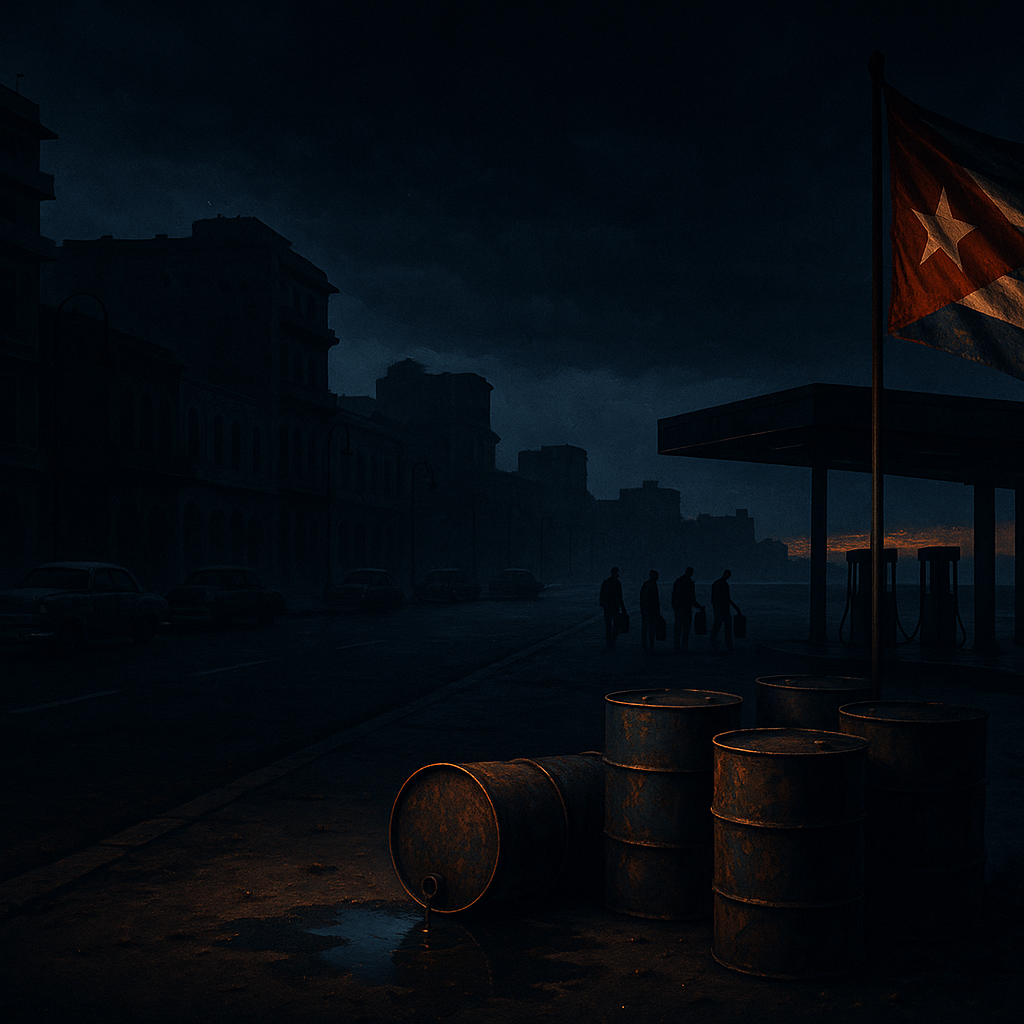
In February 2026, Cuba is engulfed in darkness. Even in Havana, 12 to 14-hour daily blackouts have become routine, while eastern regions regularly go days without electricity. Long queues form at gas stations as people desperately seek fuel, and food prices have skyrocketed. UN Secretary-General António Guterres has warned that Cuba faces humanitarian "collapse" if its oil needs go unmet.
The direct cause of this crisis traces back to events one month ago. In January 2026, the United States conducted a military operation in Venezuela that resulted in the capture of President Nicolás Maduro. Since then, Venezuela's oil exports to Cuba have completely ceased. Cuba depends on imports for two-thirds of its energy needs, and Venezuela had been its primary supplier for decades. Now that lifeline has been severed.
US President Donald Trump has designated Cuba as "an unusual and extraordinary threat" to America while intensifying pressure. He declared that "Cuba will be failing pretty soon." Meanwhile, Cuban President Miguel Díaz-Canel has expressed willingness to negotiate while simultaneously announcing preparations for a "defense plan in case of war." Around this small Caribbean island, the most dangerous confrontation since the Cold War is taking shape.
Chapter 1: A Collapsing Power Grid — The Crisis in Numbers
The Scale of Power Shortages
According to official reports from Cuba's Electric Union (UNE), the country's power deficit exceeded 1,800 megawatts (MW) as of the first week of February. This represents approximately 35-40% of national peak demand.
Regional Blackout Status (as of February 5)
- Havana: 12-14 hours of rolling blackouts daily
- Four Eastern Provinces (Holguín, Granma, Santiago de Cuba, Guantánamo): Complete grid collapse on the night of February 4, affecting approximately 400,000 people
- Central cities like Santa Clara and Camagüey: Reports of more than 16 hours of daily blackouts
On the night of February 4 at 8:54 PM, a fault at Holguín's 220kV substation triggered a chain reaction that collapsed the entire eastern power grid. The Felton and Renté thermoelectric plants simultaneously shut down, plunging all of eastern Cuba—including Santiago de Cuba, the country's second-largest city—into total darkness.
The Reality of Fuel Shortages
In a speech on February 5, President Díaz-Canel confirmed that "Cuba has not received a single drop of oil from Venezuela since December." This is the heart of the current crisis.
Cuba's Energy Dependency Structure
- 66% of energy needs met through imports
- Venezuelan oil: Previously supplied approximately 50,000-100,000 barrels per day at heavily discounted prices
- Mexican oil: A supplementary source, now halted due to US tariff threats
- Domestic production: Approximately 40,000 barrels per day (less than a quarter of demand)
Lines of vehicles waiting 5-10 hours at gas stations have become commonplace. One Havana resident told EL PAÍS, "This feels apocalyptic."
Chapter 2: The Venezuela Takedown — Origins of the Crisis
Maduro's Capture and Its Aftermath
In early January 2026, the Trump administration launched a military intervention in Venezuela under the operation name "Operation Southern Spear." While the official justification was combating drug trafficking organizations, the operation resulted in the capture and transfer of President Nicolás Maduro to the United States.
Maduro Ouster Timeline
- Early January: US special operations, Maduro captured
- After January 8: Venezuela-Cuba oil shipments completely halted
- Late January: Vice President Delcy Rodríguez emerges as interim leader
- As of February 5: 383 political prisoners released out of an estimated 800+ detained
Venezuela's new interim government walks a tightrope between Trump administration demands and expectations from Chavista hardliners. The US has asserted control over Venezuelan oil and has not permitted resumption of exports to Cuba.
The End of a Two-Decade Alliance
The Venezuela-Cuba alliance began after Hugo Chávez came to power in 1999 and lasted over a quarter century. Cuba sent doctors and teachers to Venezuela in exchange for oil at heavily discounted prices.
History of the Venezuela-Cuba Oil Agreement
- 2000: Caracas Energy Agreement signed, preferential oil supply to Cuba begins
- 2004: ALBA (Bolivarian Alliance for the Americas) launched, institutionalizing the alliance
- Peak period (early 2010s): Over 100,000 barrels supplied daily
- Post-2019: Gradual reduction due to US sanctions, down to approximately 50,000 barrels daily
- January 2026: Complete cessation
The severance of this oil lifeline means more than an energy crisis for Cuba—it represents the collapse of an entire economic model.
Chapter 3: The UN Warning — "Humanitarian Collapse"
Guterres's Warning
On February 5, UN Secretary-General António Guterres expressed being "extremely concerned" about the situation in Cuba, warning that the humanitarian situation would "worsen, if not collapse, if its oil needs go unmet."
UN Resident Coordinator in Cuba Francisco Pichón described the local situation: "What we see now, especially after the recent events in Venezuela, is a combination of emotions—a mix of resilience, but also grief, sorrow and indignation, and some concern about regional developments."
Humanitarian Indicators
Food and Basic Necessities Situation
- Food prices: 30-50% increase compared to December (varies by item)
- Medicine shortages: Over 70% of chronic disease medications in short supply
- Water supply: Pump operation restrictions expanding areas without water
- Public transportation: Bus service reduced by more than 50%
The most vulnerable sector is the healthcare system. Cuba has boasted one of Latin America's best healthcare systems, but power and fuel shortages are causing serious disruptions in hospital operations. Delayed surgeries, spoilage of refrigerated medications, and limited ambulance service are all being reported.
Chapter 4: Trump's Strategy — Pressure and "The Deal"
"Cuba Will Be Failing Pretty Soon"
President Trump has made unfiltered statements about the Cuba crisis. In an NBC interview, he said Cuba "will be failing pretty soon, and they know it." When a reporter asked whether Iran's Supreme Leader Khamenei should be worried regarding nuclear talks, Trump responded "he should be very worried"—implying the same logic applies to Cuba.
White House Press Secretary Karoline Leavitt warned: "While these negotiations are taking place, I would remind the Iranian regime that the president has many options at his disposal, aside from diplomacy, as the commander-in-chief of the most powerful military in the history of the world." This message is clearly intended for Cuba as well.
Oil Blockade and Tariff Threats
The Trump administration's Cuba strategy operates on two axes:
First, cutting off oil supply
- Prohibition on Venezuelan oil exports to Cuba
- Threatened sanctions/tariffs on any country supplying oil to Cuba
Second, offering a "deal"
- Trump has implied Cuba could ease its situation through a "deal"
- Specific conditions remain unclear but likely include political reforms
This strategy resembles the Kennedy administration's 1962 Cuba blockade, with one crucial difference: Cuba then had the Soviet Union as an alternative patron. Could China or Russia play that role today?
The Irony of $6 Million in Aid
Interestingly, on February 5, the US announced $6 million in humanitarian aid to Cuba. This can be interpreted as messaging that the US is applying pressure while maintaining humanitarian considerations. Critics, however, call this hypocrisy—cutting off a lifeline with one hand while offering relief supplies with the other.
Chapter 5: Cuba's Response — Between Dialogue and Defense
Díaz-Canel's Dual Message
On February 5, Cuban President Miguel Díaz-Canel delivered a lengthy speech explaining the current situation to his people. His message operated on two axes.
First, willingness to dialogue
"Cuba seeks 'civilized' dialogue without pressure or interference. We are a nation of peace and not a threat to the United States."
Second, preparing for war
"We are not in a state of war, but we are preparing ourselves in case we have to be." Díaz-Canel announced that the National Defense Council had updated its defense plans and mandated military training on Saturdays for the entire population.
Emergency Energy Measures
Díaz-Canel also announced emergency energy plans. Most notable is the "power from waste" initiative—expanding biomass generation using sugarcane waste (bagasse), household waste, and other materials. However, experts note this cannot be a short-term solution.
Cuban Government Emergency Measures
- Expanded biomass/waste power generation (long-term plan)
- Systematized rolling blackout schedule (demand management)
- Adjusted public institution work hours
- Shutdown of non-essential industrial facilities
- Emergency support requests to allied nations
Chapter 6: Mexico's Dilemma — Between Humanitarianism and Tariffs
Secret Negotiations
According to an exclusive Reuters report, senior Mexican government officials are exploring ways to send fuel to Cuba without triggering US tariff retaliation.
The Trump administration has threatened to impose tariffs on any country supplying oil to Cuba. Mexico is already in a separate tariff dispute with the US and doesn't want to escalate the situation over Cuba.
However, voices within Mexico call for support based on historical ties with Cuba and humanitarian considerations. Cuba and Mexico have maintained close relations since the revolutionary era.
Mexico's Options
- Negotiate with the US: Request permission for limited fuel exports for humanitarian purposes
- Find workarounds: Explore tariff-avoidance methods such as routing through third countries
- Accept the cost: Support Cuba and accept tariff consequences (realistically difficult)
- Abandon support: Stop Cuba assistance (domestic political cost)
According to sources, Mexico-US consultations are ongoing with hopes for agreement. However, no final decision has been made, and fuel shipments to Cuba remain suspended during negotiations.
Chapter 7: Historical Context — The Shadow of 60 Years of Embargo
US-Cuba Relations Timeline
The US embargo on Cuba began in 1962 and has lasted over 60 years. It is one of the longest-standing economic sanctions in modern history.
Key Historical Turning Points
- 1959: Fidel Castro's revolution succeeds
- 1961: Bay of Pigs invasion fails
- 1962: Cuban Missile Crisis, US full embargo begins
- 1991: Soviet Union collapses, Cuba's "Special Period" begins
- 2014: Obama and Raúl Castro agree to normalize relations
- 2017: Trump's first term reverses normalization
- 2021: Massive anti-government protests, additional US sanctions
- 2024: Trump re-elected
- January 2026: Venezuela intervention, Cuba's oil lifeline severed
The Nightmare of the "Special Period"
After the Soviet Union's collapse in 1991, Cuba experienced a severe economic crisis called the "Special Period" (Período Especial). GDP fell by 35%, and food and fuel shortages forced Cubans to eat cats and banana peels. Electricity was limited to a few hours daily.
The current situation reminds many Cubans of that nightmare. But there's a crucial difference—back then, Cuba gradually found a new patron in Venezuela. This time, no such alternative is visible.
Chapter 8: Scenario Analysis — Cuba's Future
Scenario A: Negotiation and Regime Change (35%)
Prerequisites
- Díaz-Canel government accepts negotiations with Trump administration
- Accepts conditions including political liberalization, release of political prisoners
- US sanctions relief and permission for oil imports
Rationale
- During the 1991 Special Period, Cuba accepted limited economic reforms for survival
- Díaz-Canel, unlike the Castro brothers, shows pragmatic tendencies
- Polling shows an overwhelming majority of Cubans want change
Limitations
- Backlash from Communist Party hardliners
- Unclear level of conditions Trump would demand
- Risk of regime change becoming uncontrollable
Scenario B: Chinese/Russian Intervention (25%)
Prerequisites
- China or Russia provides emergency oil support to Cuba
- Decision to support Cuba despite US sanctions
Rationale
- Geopolitical interest: Maintaining a foothold in America's backyard
- Logic of China's Belt and Road expansion
- Russia's motivation to counter the US
Limitations
- China tends to avoid additional friction with the US amid trade disputes
- Russia's capacity is stretched by the Ukraine war
- Logistical challenges of maintaining stable oil supply to Cuba
- Historical precedent: Even the Soviet Union eventually stopped supporting Cuba
Scenario C: Prolonged Crisis (30%)
Prerequisites
- No negotiation progress, current situation extends long-term
- Cuban government endures through austerity and rationing
- US maintains current sanction levels without additional pressure
Rationale
- Cuba has experience overcoming past crises like the Special Period
- Regime's survival instincts and repression capabilities
- US attention may become distracted by other issues
Limitations
- There are limits to public patience
- Economic collapse eventually leads to political instability
- Mass emigration attempts could escalate US-Cuba tensions
Scenario D: Social Explosion/Regime Crisis (10%)
Prerequisites
- Food/energy shortages reach critical point
- Large-scale protests emerge (larger than July 2021 protests)
- Regime loses control
Rationale
- July 2021 protests were the largest since the Cuban Revolution
- Accumulated frustration among younger generations
- Possibility of organization through social media
Limitations
- Cuban government's strong repression capabilities
- Lack of organized opposition/civil society
- Military support for the regime
Conclusion: A Watershed in the Caribbean
Cuba's energy crisis is not merely a fuel shortage. This is the most dangerous US-Cuba confrontation since the Cold War and could become a watershed moment in Latin American geopolitics.
The Trump administration, by removing Maduro from Venezuela and cutting Cuba's oil lifeline, is applying historic pressure on the Cuban communist regime. Whether this strategy will achieve its desired outcome—Cuban democratization—remains uncertain.
History shows that economic pressure alone rarely topples authoritarian regimes. North Korea, Iran, Venezuela—despite decades of sanctions, these regimes have survived. Instead, the suffering has fallen on ordinary citizens.
The UN's warning of "humanitarian collapse" is not an exaggeration. Cuba's most vulnerable populations—the elderly, the sick, children—are bearing the greatest burden. If the crisis is prolonged, mass emigration attempts will follow, which becomes a direct problem for the United States as well.
President Díaz-Canel's dual message of "willingness to dialogue" and "preparation for war" reveals the Cuban government's dilemma. Negotiating raises regime security concerns; holding out pushes public suffering to its limits.
Mexico's secret negotiation attempts could open a third possibility in this crisis. If limited fuel supply for humanitarian purposes is permitted, Cuba could avoid the worst-case scenario. Whether the Trump administration will allow this remains to be seen.
One thing is certain—for the 11 million Cubans enduring blackouts in darkness, this is not abstract geopolitics but a matter of survival. As the world watches, a page of history is being written on this small island in the Caribbean.
Eco Stream Research | February 7, 2026
Leave a Reply